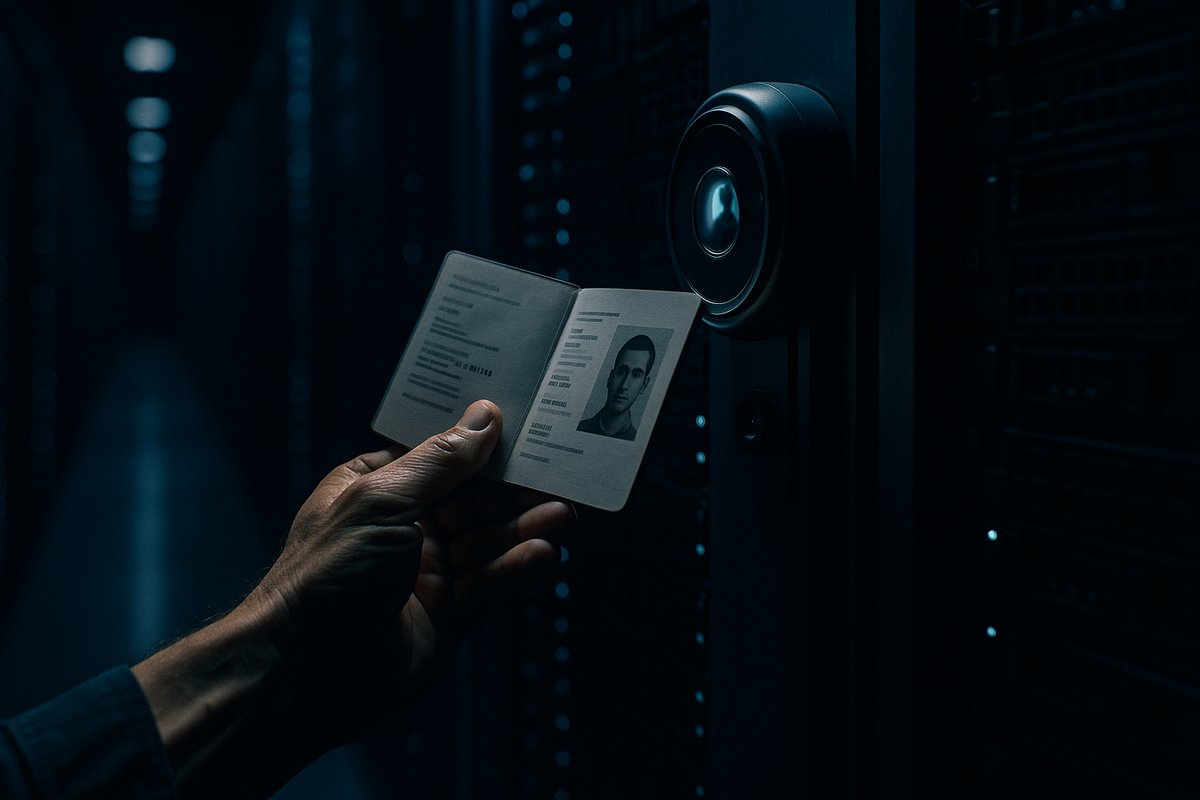
When a tech company asks you to verify your identity, the usual explanation points to security and regulatory compliance. Anthropic, the organization behind Claude, has begun requesting this verification from specific users under certain conditions. The most widely circulated account holds that this responds to a tightening regulatory environment in the United States.
That reading rests on real facts. Congress is debating frameworks for artificial intelligence. Federal agencies have issued voluntary guidelines that generate enough pressure for companies to act preemptively. Requesting identity in that context seems like a reasonable precaution when someone uses Claude for borderline activities.
There are precedents. Financial services have run know-your-customer processes for decades. Digital asset platforms adopted similar dynamics under regulatory pressure. Seen this way, Anthropic is simply following a familiar maturation curve.
And yet the explanation shows cracks.
Based on the publicly available record, there is no concrete legal mandate today requiring language-model companies to verify identities. Most frameworks remain proposals or non-binding guidelines. Federal legislation that would directly regulate companies like Anthropic has yet to crystallize. If the law doesn't require it, it's worth asking what's really going on.
Nor does the verification operate uniformly. It's triggered only for certain profiles or situations, which changes the analysis entirely. A blanket legal requirement would apply without exceptions. A selective process that singles out users based on internal signals suggests proprietary risk lists or coordination with third parties. This pattern shows up in other contexts where measures are presented as neutral but actually follow targeted logic.
The Fable case adds another layer. This interactive storytelling platform with generated characters saw its access to Anthropic's models restricted. The block sparked debate because it involved creative uses centered on role-play and fiction. This raises the question of whether identity verification is specifically meant to document or limit that kind of exploration.
If that connection exists, we're no longer talking about mere compliance. We'd be looking at an internal use-management policy, dressed up in the language of responsibility and safety. Infrastructure that starts out as preventive tends to expand once it's built.
What's rarely mentioned is that Anthropic may be building this capability not because the law demands it today, but because it anticipates that it will tomorrow, or because it offers its own strategic value. Having data on high-risk users helps in litigation defense, in negotiating with governments, and in demonstrating accountability to investors. It also makes it easier to respond to agency requests without technically violating privacy, since the user has already given consent.
The historical record with telecommunications is instructive. Companies justified stricter recordkeeping for security reasons. That same infrastructure later enabled mass surveillance programs that only came to light years afterward. I'm not saying Anthropic is repeating that exact story. I'm saying the sequence deserves scrutiny because it has repeated itself often enough.
There are aspects of this process I still don't fully understand, especially the precise criteria that trigger the request. What data is collected, where it's stored, for how long, and under what conditions it's shared: none of that has a clear answer. Anthropic hasn't explained whether some authority formally required this or whether it's an internal decision. That opacity is, in itself, relevant information.
This matters because it sets a precedent. If selective verification without a supporting legal framework becomes normalized, the rest of the industry will tend to follow the same path. Once the structure exists, the threshold for expanding its use tends to drop.
What's curious is that Anthropic was set up as a public benefit corporation, with formal obligations toward social welfare beyond shareholders. That legal structure should, in theory, translate into greater transparency. This policy arrived without open communication, without consulting users, and without detailing its legal basis.
From emerging economies, these dynamics look different: privacy protections tend to be more fragile, and users have fewer resources to question what they're agreeing to.
What implications will this precedent have for those of us accessing these tools from contexts where individual safeguards are limited?