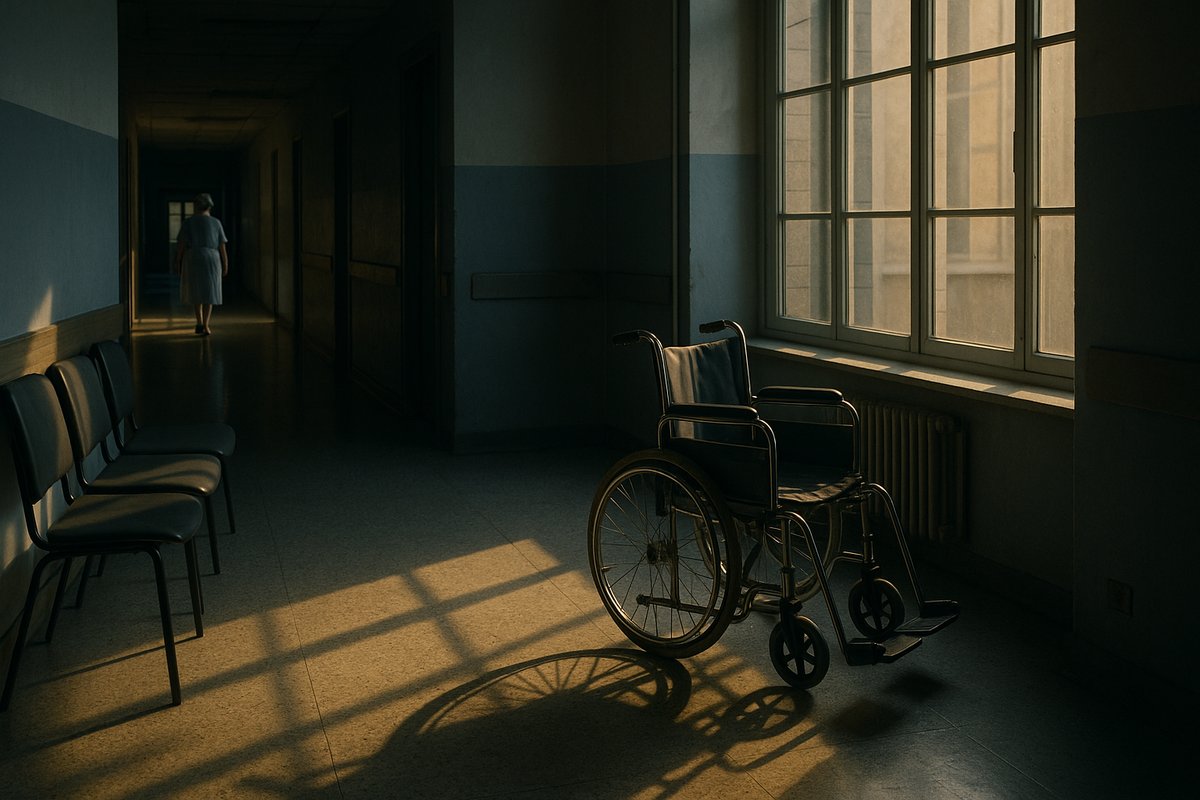
A single hard number defines Europe's present. Every year, more people die than are born. This imbalance has held for over a decade now, and migration papers over it like a temporary patch. Without that external flow, the natural decline would already be plain to see.
This dynamic has a name: advanced demographic transition. It's the point where fertility falls below replacement level while longevity keeps stretching, because improvements in public health, women's education, and real access to contraception change the priorities of millions of people.
I've seen similar trends in other contexts. Europe perfected quality of life and collective health. That very achievement produced the contraction the European Commission now has to manage.
What this record shows isn't a moral failure or a crisis of values. It's the predictable mathematical outcome of rational decisions made by individuals: finishing an education before having children, securing economic stability, using available contraceptive methods. The real problem arises when a pension system and an economy designed for a different demographic pyramid collide with today's reality.
Why does this matter beyond the statistics? Female life expectancy will surpass ninety years in every member state by the end of this century. That means entire generations of women living three decades or more past conventional retirement, supported by an ever-shrinking number of working-age people. The structure that held up welfare systems for generations is being irreversibly turned on its head, because the people who will turn seventy in the coming decades have already been born — or haven't been.
This is where Commissioner Dubravka Šuica and her proposed demographic toolbox come in. The goal is to bring into the labor market the twenty percent of working-age people who currently remain outside it due to caregiving duties, disability, lack of motivation, or structural exclusion. The logic sounds reasonable on paper: if you can't manufacture young workers overnight, integrate the ones who already exist.
What does this mean for the citizen who doesn't read Brussels reports? The coming decades of public policy will revolve around keeping hospitals, schools, and pensions running with fewer hands available. The official answer combines regulated immigration, birth incentives that tend to show modest effects, and this integration of the currently sidelined twenty percent. None of the three approaches solves the issue on its own.
What's interesting is how closely this echoes other institutional promises. In The Generosity in the Doorway I explore how automation and artificial intelligence claim to free up human time and reintegrate those the market left behind. Faced with a genuine structural crisis, the responses tend to be technical: a toolbox, an algorithm, a tax incentive. Rarely do they open an honest conversation about redistributing resources and time.
The study conducted in Marienthal, Austria, in 1933 remains essential reading. Marie Jahoda, Paul Lazarsfeld, and Hans Zeisel documented how prolonged unemployment unravels not just income but the very structure of daily time itself. Without work, schedules, projects, and reasons to get up in the morning disappear. That classic finding illustrates the deep consequences of excluding part of a population from productive life. Now the European Union is trying to reverse that very exclusion on a much larger scale, though we still don't know whether the proposed tools will actually work.
From Mexico, I see these dynamics differently. The pressures here point toward younger populations facing their own bottlenecks in employment and migration. The contrast doesn't solve Europe's puzzle, but it adds necessary layers to any analysis.
I still don't have a clear answer, and I'd rather say so plainly. Does the demographic toolbox represent genuine integration, or does it become the institutional version of what we're already seeing with artificial intelligence — a technocratic promise that ends up benefiting the people who design the framework more than those supposedly being integrated? I'm still working through this. Europe needs these measures, and at the same time it needs a deeper political conversation about what it means to grow old collectively — without pretending that a bundle of policies will reverse what tens of millions of legitimate individual decisions built over decades.