There's a scene that has repeated itself in the financial world for decades. An industry moves faster than regulators and decides to create its own rules to avoid outside impositions. That's how FINRA was born, the body that oversees stockbrokers in the United States without being formally part of the government. Demis Hassabis, from Google DeepMind, is now proposing a similar approach for artificial intelligence.
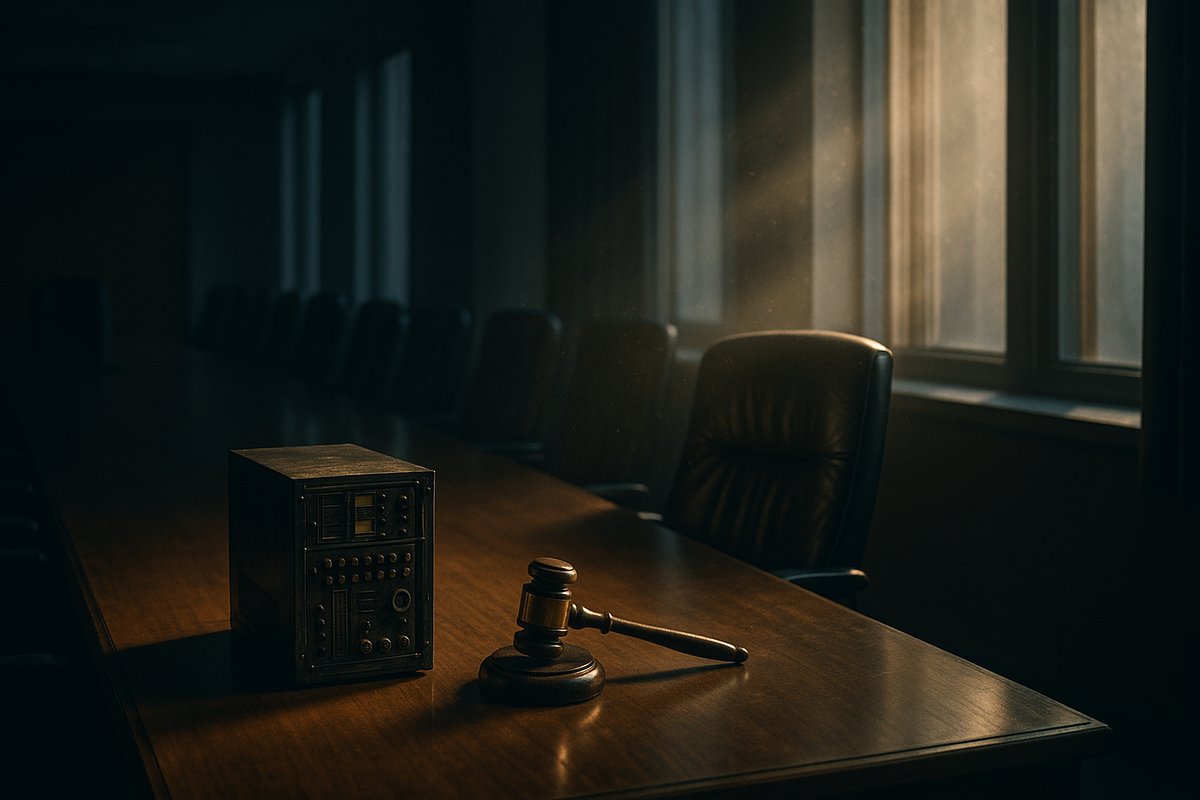
An AI oversight body is an entity that reviews models before their public release, seeking to detect dangerous capabilities—deception, bioweapon creation, malicious hacking—before they reach millions of users. That's Hassabis's proposal: a body modeled on FINRA, where the industry oversees itself under the state's shadow. Frontier labs would voluntarily submit their models for review thirty days before launch. Coverage would depend on the system's capability, not on its location or who has access to it.
Hassabis wants this body up and running this very year. He told Axios that open-source capabilities could reach dangerous territory within eighteen months. That's not a vague warning about some distant future. It's a concrete deadline with a clock running.
Why FINRA and not the FDA or the SEC? Speed. The AI field demands near-instantaneous adaptation, including the possibility of coordinating a slowdown among labs if needed. The fact that Hassabis is even contemplating asking for a collective pause among DeepMind, OpenAI, and Anthropic already says a lot about the scale of the problem he's trying to solve.
What happens when market incentives override voluntary agreements? History suggests that pauses dissolve the moment a competitor speeds up. That's why skepticism kicks in immediately.
I've seen similar dynamics in other contexts: self-regulatory structures that reveal the same tensions the moment they're put under pressure. The records of old trade associations show something constant: shared interest between watchdogs and the watched ends up diluting controls. This isn't an accusation of bad faith. It simply confirms that incentives shape outcomes, in the nineteenth century as much as now.
FINRA didn't stop Bernie Madoff for years, nor did it prevent the 2008 crisis. It holds real authority, but its failures illustrate the limits of self-regulation: regulator and regulated share networks, events, and staff who constantly rotate between both sides. Can a body funded by the very companies it evaluates actually put the brakes on something when the market rewards speed?
This tension also shows up in climate governance. Initiatives like SPGET got around blockages from centralized structures by forming their own coalitions. But there's a key difference: when companies propose the framework for their own oversight, the origin changes everything. Designing your own cage isn't the same as accepting one imposed from outside.
The Generosity in the Doorway traces a similar trend in the AI economy: whoever builds the infrastructure ends up administering the remedies to their own risks, almost by inertia. When speed determines who wins the market, a thirty-day pause is a temporary disadvantage that's hard to sustain.
And what about those who decide not to join the scheme? A lab that avoids the "frontier" label, or that operates out of distant jurisdictions, falls outside its reach. This echoes objections from emerging economies, where blocs like BRICS demand distributed transparency because they distrust self-regulation led from the United States. A body headquartered there, with criteria defined locally, builds domestic trust that later hopes to spread through market inertia. It doesn't always work that way.
What's most valuable about the proposal is its candor about open source. Hassabis sets an eighteen-month horizon for when open capabilities could cross critical thresholds in bioweapons or cybersecurity. That specificity stands in contrast to the industry's habit of talking about distant risks, and it's a welcome change.
I don't have a clear solution for this. Self-regulatory mechanisms driven by fear of stricter legislation can work for a while, before fatigue hollows them out. A FINRA for AI beats having no oversight at all. But better than nothing falls far short of being enough. That in-between space—the same one that shows up in studies like the Marienthal research—is where the real negotiations between labs, governments, and a public that doesn't even have a seat at the table will actually get settled.
What happens on the day this body, funded and staffed by the very companies it oversees, has to choose between blocking the launch of its main funder or settling for a mild warning?
Sources:
1. Axios, interview with Demis Hassabis on the proposed AI oversight body.
2. FINRA (Financial Industry Regulatory Authority), structure and regulatory mandate.
3. Yves Laurent, The Generosity in the Doorway (Amazon, B0H6RT5Y32).
4. Prior coverage on Anthropic and its collaboration with the U.S. Department of Defense.
5. Prior analysis on SPGET and distributed climate governance.