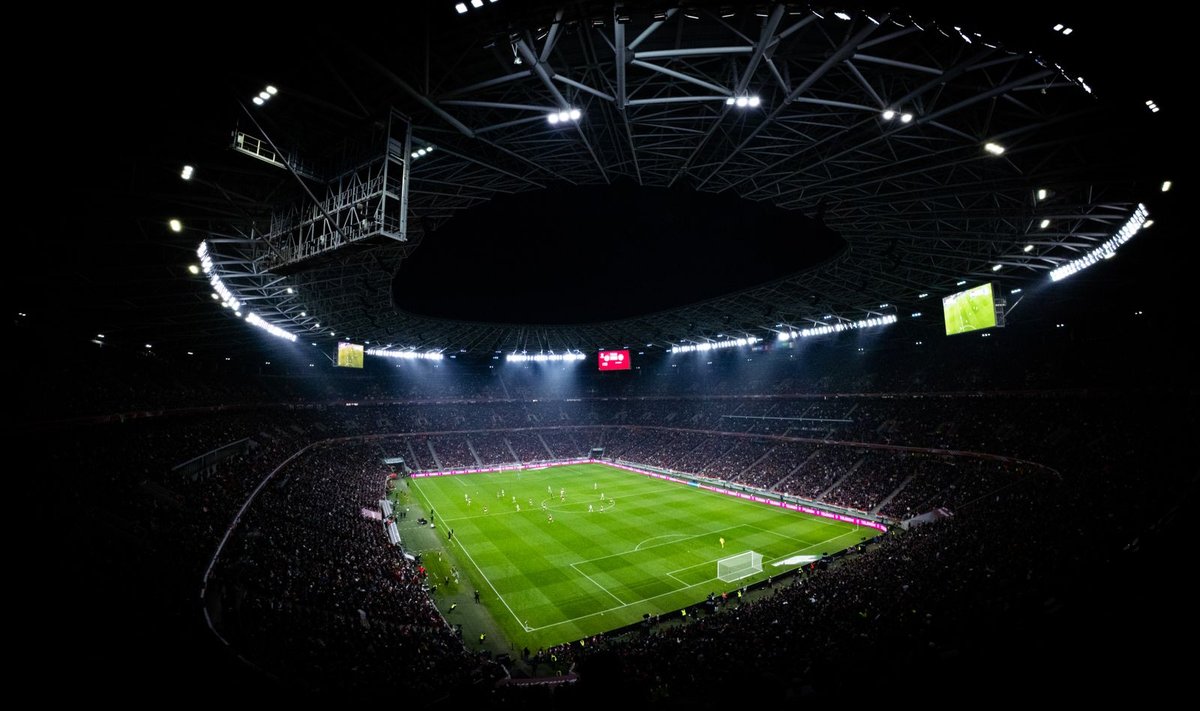
I grew up around courts. My father was a basketball coach and they put me in every sport that existed: soccer, basketball, tennis, jai alai. I wasn't the athlete in the family—I'm more head than body—but sports marked me as a spectator. We watched everything on television. Two things really captured me: the NFL and the World Cup. I became a Raiders fan. And it was precisely following my team that something broke in how I saw all of this.
January 19, 2002, in the season marked by 9/11. Charles Woodson tackled Tom Brady, the ball came out, the Raiders recovered it. It was the end of the game. It was the pass to the next round. And a rule almost no one knew about appeared: the tuck rule. They reversed the play. The Patriots won, went to the Super Bowl, and began a dynasty of six championships. Eleven years later, in 2013, the league abolished that rule by a vote of 29 to 1 (the only vote against was from the Steelers; the Patriots and the then-Redskins abstained). The rule that defined a dynasty was so indefensible they erased it. But the championship was already written.
I'm not claiming that game was fixed. I can't prove it and I won't make it up. What I'm saying is more uncomfortable: at the moment when the United States needed a symbol of resilience after 9/11, the country's most-watched sport produced that symbol, through the team most associated with the patriotic narrative, thanks to a rule no one knew about and that was later eliminated. I don't need to assert intention. The facts in sequence are enough.
Once you see a pattern, you can't stop seeing it. The two-minute warning: I asked experts for years and no one could give me a sporting reason, only advertising sales. The halftime show grew until it became more important than the game. You used to be able to watch sports on broadcast TV. Today you pay an expensive subscription, and even while paying, they serve you commercials with the volume slightly turned up. The remote viewer went from being audience to being a triple revenue stream: pays the subscription, watches the ads, and finances the rights that the networks pass on as their cost.
There's one case that illustrates how far the logic goes, though it's worth being precise about who does it. In the Mexican soccer league, uniforms have become billboards: more sponsors than can aesthetically fit on a jersey. This isn't FIFA practice or all leagues—it's a decision by specific leagues that treat every inch of fabric as inventory. FIFA operates differently, with its "clean stadium" policy that covers logos of non-official sponsors. But that difference isn't generosity: it's exclusivity. Only those who paid FIFA appear.
I've been avoiding the NFL for years. I don't want to be part of the machinery. It charges the attendee, the networks, the advertisers, and now the remote viewer for everything all over again. And here's the piece that connects everything: in September 2023 Gianni Infantino met with Roger Goodell, NFL commissioner, to discuss the 2026 World Cup venues. Of the 16 host stadiums, all 11 American ones are NFL team homes. And the transfer is literal: Fanatics, which operates the NFL's collectible patch program, has been since late 2025 the official retail operator of the 2026 World Cup—104 matches, 39 days, three countries—and starting in 2031 will transplant the "player jersey patch" model from the NFL to soccer via an exclusive collectibles agreement. FIFA is learning the NFL's extractive model piece by piece.
The hardest data isn't just fiscal, it's territorial. Montreal withdrew as a host in 2021. Publicly it cited costs. But Radio-Canada's Enquête investigation revealed the real conditions: no events allowed in Olympic Stadium between April 25 and July 19, 2026, the World Cup fields without other use for 23 months (from September 2024 to July 2026), and FIFA access to Parc Jean-Drapeau and the Old Port between May 22 and July 17. That would have compromised the F1 Grand Prix, the Montreal Triathlon, and the world's largest Jazz Festival. FIFA didn't ask to rent a stadium. It asked to annex the city.
If Montreal did its math and said no, why did other cities, with the same numbers, say yes? Each game will cost Canadian taxpayers about $82 million. Toronto and Vancouver are spending between $300 and $400 million each. A Concordia economist said Montreal is right "not only in feeling vindicated, but in feeling some schadenfreude." The possible answers are all revealing: either they calculated differently, or they prioritized prestige over profitability, or they believed they'd be the exception to the 12 out of 14 World Cups that lost money. None speaks to a rational economic decision.
Mexico organized two World Cups. The 1970 one had a good cost-benefit ratio for one reason only: the infrastructure was already paid for by the 1968 Olympics. And it was awarded the bid because Telesistema Mexicano—today Televisa—guaranteed color satellite transmission. It wasn't won on soccer merit, but on who controlled the medium. The 1986 one is even more revealing: Mexico organized it in the middle of a debt crisis, entering IMF adjustment programs and negotiating entry into GATT. Economically it made no sense. Both World Cups were, at bottom, operations of the Azcárraga-Cañedo alliance, the owners of Televisa. Not the country's. Not soccer's. The company that controlled the transmission.
If the benefit wasn't economic, what was gained? In 1986, with the country broke, the World Cup projected an image of normalcy and stability outward just when Mexico was negotiating its entry into GATT and its debt restructuring. It was a geopolitical public relations tool at the exact moment the country needed to appear functional before financial organizations. The benefit wasn't for citizens. It was for the liberalization project and for Televisa. Fifty-six years of Mexican World Cups reveal that these events are never decided on their profitability. They're decided on what they represent for those with the power to organize them.
And we arrive at today. The United States has been in active war with Iran since February 28, when it launched Operation Epic Fury against Iranian military infrastructure in coordination with Israel. Even so, both countries are in the same World Cup—but not on equal footing. For the first time in tournament history, a host country receives a team from a country it's at war with. The U.S. didn't allow Iranian players to train on its soil; the team set up its base in Tijuana. And the detail that makes it outrageous: Iran was denied overnight stays in the U.S. for three consecutive games. They had to fly to Tijuana in the early morning after each match. Their coach, Amir Ghalenoei, said it without filter: "Our team is the most oppressed one in the whole World Cup." FIFA, which demanded sovereign control from Montreal, didn't lift a finger to protect a participating team from its own host.
FIFA expanded the tournament to 48 nations. The narrative is beautiful: the democratized dream, small nations at the global party. Cape Verde, with about 525,000 inhabitants, became at the moment of its qualification the smallest country by area to qualify (Curaçao dethroned it a month later). But the underlying logic is commercial. Each new nation is a new national market of viewers and subscribers who previously had no reason to tune in. More teams mean longer tournament, more matches, more advertising inventory, more markets. Cape Verde's dream is real. And simultaneously it's a product. Both things at once.
American cities accepted the terms Montreal rejected, in a context that makes the decision even stranger. A travel ban affected citizens of 39 countries, preventing most ordinary fans from obtaining visas. A "visa bond" program required fans from five African nations—Algeria, Cape Verde, Ivory Coast, Senegal, and Tunisia—to put down deposits of up to $15,000 to enter the country. FIFA used dynamic pricing: final tickets that started at $6,730 rose to $10,990, with front-row seats exceeding $30,000. The global spectacle of unity happens in a country that closed its doors to spectators from the countries that are playing.
This is the conclusion I reached after decades of watching. The system doesn't need to fix matches to extract value. The tax exemption gets collected no matter who wins. The remote viewer pays no matter who wins. Cape Verde's new market tunes in no matter who wins. But when, in addition, close calls consistently favor the commercially optimal narrative—the coronation of the idol who sells jerseys, the symbol the country needed—the question stops being whether it's rigged. The question is why a system that moves billions needs us to stop questioning it while we watch.
What I saw on June 16, 2026: Argentina against Algeria. In the first half, Messi raked his studs over the calf and ankle of Aïssa Mandi, Algerian captain. Multiple professional analysts called the play a straight red. Referee Szymon Marciniak called a foul and didn't show even a yellow. VAR, Tomasz Kwiatkowski, reviewed and found no "clear error." Messi stayed on the field and scored three goals, tying Miroslav Klose's historic World Cup record. The Algerian Football Federation filed a formal complaint with FIFA about the officiating. ESPN analyst Ale Moreno was direct: "It's 100% red for Messi." The cameras showed Infantino smiling. And a detail that only closes the circle: Marciniak is the same referee who officiated the Qatar 2022 final, where Messi secured the only trophy he was missing. The same referee. The same beneficiary. Two World Cups. I'm not claiming anything. I'm just pointing out that the jersey seller who fills stadiums remains in the tournament.
Rome understood it before anyone: panem et circenses. As long as the crowd has bread and spectacle, it won't ask about power. What was done then with gladiators and subsidized wheat is done now with broadcast rights, tax exemptions, and price dynamics. The book I'm finishing documents this mechanism through twelve thousand years of archaeological and historical evidence. The novelty isn't the mechanism. It's the scale—billions of global spectators—and the sophistication: the spectacle that charges four times for the same attention while simultaneously serving as a showcase for soft power and as an instrument of geopolitical exclusion. The tools changed. The function is identical.
I'm not going to tell you what to conclude. I'm going to leave you the facts in sequence, as I found them, and the same question I ask myself every time I see someone celebrate a goal without asking who collected payment for that celebration. I stopped being able to see sports the same way. I'm not asking you to do the same. I'm asking you to look at the dots, connect them yourself, and decide whether what appears is my paranoia, or something that was always there, waiting for someone to stop watching the ball long enough to see it.