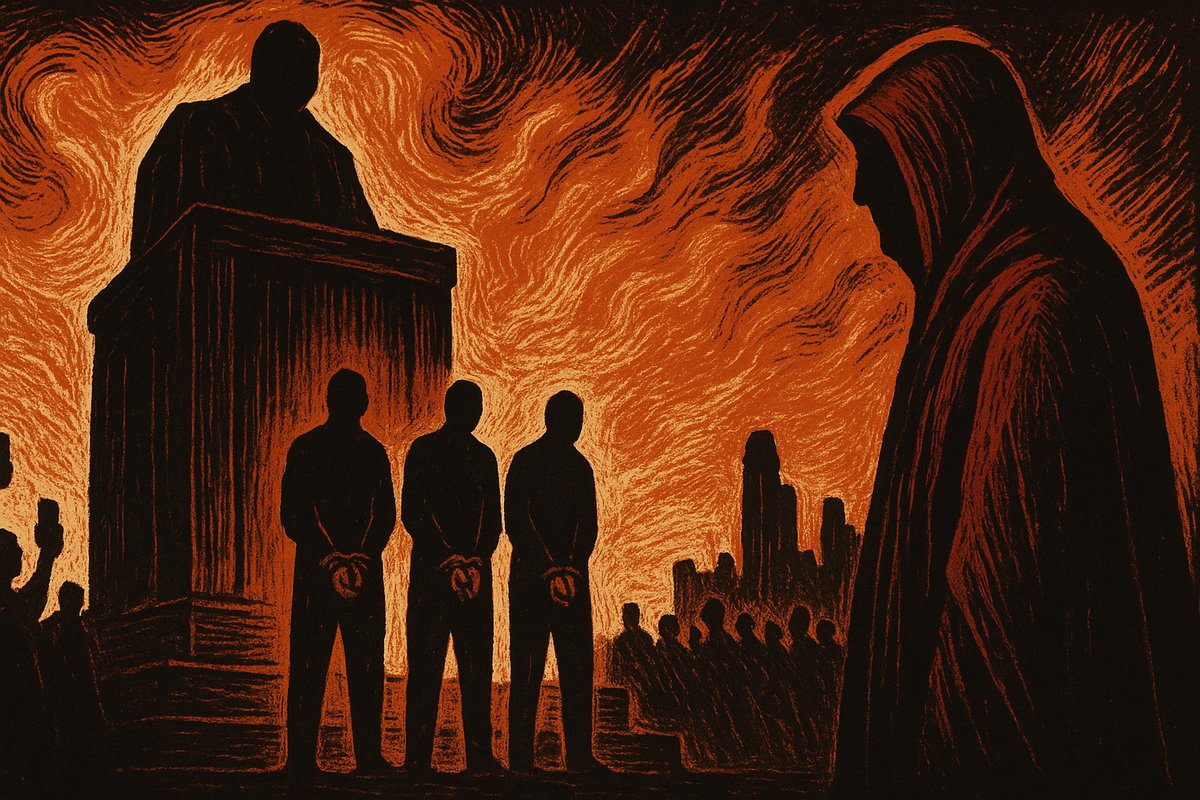
On August 5th a Dakar court convicted three influencers. They had posted comedy videos. Mandoumbe Diop, known as Lamignou Darou, received three months in prison. Magueye Diaw and Moustapha Ndiaye got two months each. Each must also pay 500,000 CFA francs, roughly $870.
Censorship is when power decides which words deserve criminal punishment, because it sets limits no one is allowed to cross. All three convicted men belong to the ruling PASTEF party. They aren't opposition figures. They made an uncomfortable joke at the wrong moment. That changes everything.
Governments of opposing ideologies are deploying local variations of this exact same approach. On different continents. In 2026. The public rupture between President Bassirou Diomaye Faye and former Prime Minister Ousmane Sonko created internal tensions that the commentators at Feenal Digital touched on with humor. Lawyer Abdy Nar Ndiaye presented them as private conversations between friends, recorded without any political calculation. The state invoked Article 254 of the Senegalese Penal Code. A law inherited from the past, now being used by the very party that promised to break with authoritarian practices.
The defense will appeal. Senegal's Constitutional Council has struck down disproportionate sanctions against media outlets before. The case remains open. The message has already been sent. Even as an ally, you're not safe if your joke makes those in power uncomfortable. Three months for a joke.
Why does punishing your own work better than only going after opponents? Because if it happened to them, it can happen to anyone. Internal trust erodes. The cohesion of the movement that brought PASTEF to power fractures. I've seen similar dynamics in other contexts. Hunt a mammoth, the whole tribe eats. Break the trust, the group falls apart. Researchers documented exactly that in primate communities in Uganda. Violence doesn't need resource scarcity. Eroding social bonds is enough. Internal censorship serves that function with precision.
A court in Dakar invokes the penal code. Digital platforms label content as disinformation or hate speech. The practical outcome converges on silence. In Europe it's enough to redefine speech under vague categories. Brazil suspended X for refusing to censor specific accounts. The UK has arrested citizens over posts. France detained tech executives. The legal frameworks change. The underlying playbook repeats itself.
Who benefits when public discourse ends up fragmented? Whoever gains control of the narrative. When punishment falls on allies, it doesn't just silence one criticism. It breeds distrust among those who should be accomplices. A structure built to protect the president from insults needs to constantly define what counts as an insult. That definition tends to expand. It starts with serious attacks and ends up including comedy between friends recorded for TikTok. The latent capacity to punish already shapes everyone's behavior, even if it's never used against most people.
Mexico is living its own version of this tension. Laws aimed at regulating digital communicators move forward while the government doesn't apply the same transparency standards to its own morning press conferences. The scales of punishment differ. So does the legal framework. They share the same underlying logic. Whoever defines the rules of public discourse rarely submits to them.
In Stones Don't Lie I explore how Singapore managed to mold collective behavior through decades of systematic pressure. The underlying problem persists in any structure that concentrates the power to define what's acceptable to say. Someone has to watch the watchman. That question rarely gets a satisfying answer in practice.
I don't have a clean solution. It would be dishonest to pretend otherwise. Governments of any political stripe arrive promising to break with authoritarianism. They end up using the very tools they criticized. Senegal's Constitutional Council can still curb excesses. The appeal by these three commentators will be one more test. Thousands of content creators in Senegal now weigh every word. That multiplied silence, replicated across dozens of countries, doesn't make headlines. Yet it changes what a society allows itself to say out loud.
What price do we pay when humor between allies becomes a crime?