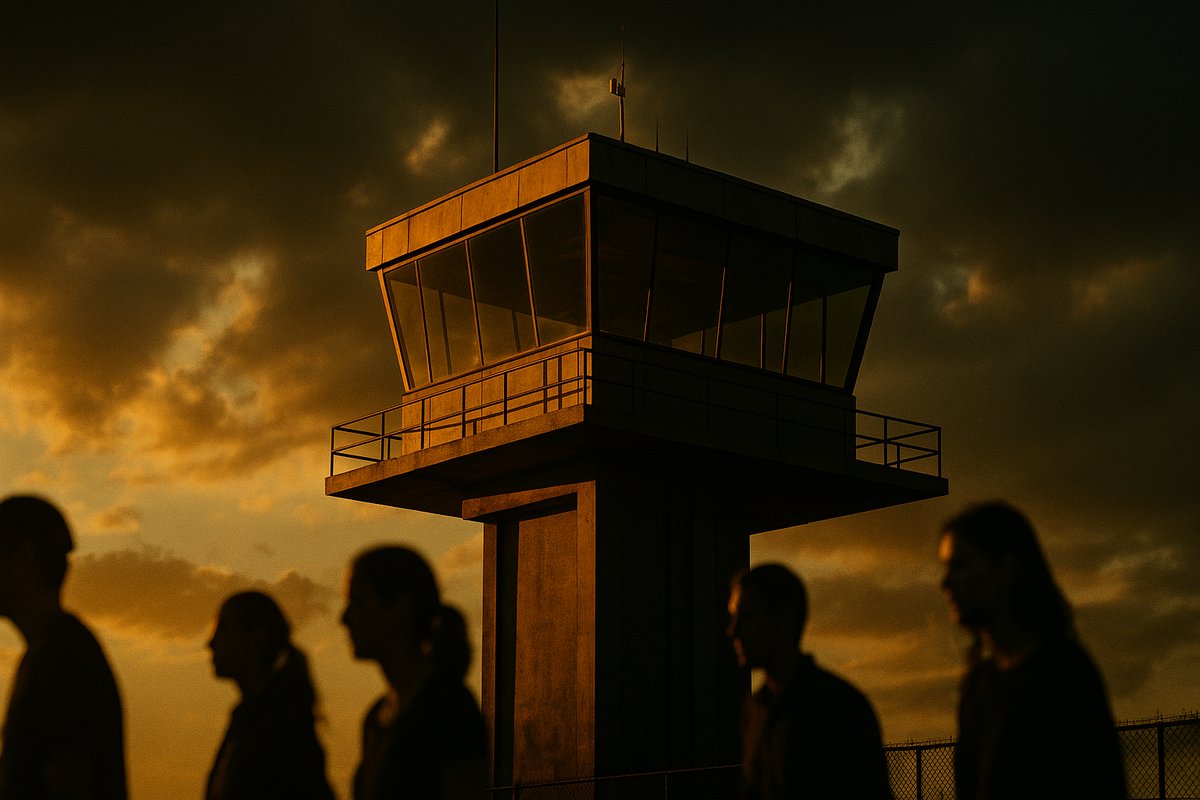
Watching is easy. Being accountable is hard.
This asymmetry defines much of how institutions, public health systems, local administrations, and even residential communities function. We have sophisticated mechanisms for observing, recording, and detecting. But the processes for making sure the watcher is also watched tend to be weak, opaque, or simply nonexistent. And that's not a design accident. It's often a decision.
There are three news items that, seen separately, appear to have nothing in common. Mexico's National Epidemiological Surveillance System publishes its weekly bulletin, updating SUAVE data for epidemiological week 2026. In Puerto Vallarta, a maritime operation intercepts two vessels operating without permits in restricted zones. And in the context of residential complex management, an uncomfortable question arises: why ask residents to pay higher dues if the overdue accounts haven't been reviewed first? Three different contexts. One identical pattern.
The pattern is this: surveillance without accountability doesn't protect the community. It protects itself from scrutiny.
This type of structure has a recognizable logic when pressured, when it fails, and especially when someone asks who supervises the supervisor. Mexico's health system epidemiological bulletin is, in principle, an instrument of transparency. Hard data, updated, accessible. But the question rarely asked is: who verifies the data is complete? What happens when a state underreports cases? What process exists for citizens to detect inconsistencies between what they experience in their neighborhood and what appears in the federal spreadsheet? The publication exists. Accountability for the quality of that publication, much less so.
This isn't a new problem. Surveillance structures have a long and complicated history. Modern states have spent centuries developing instruments to observe their populations: censuses, parish records, vital statistics. The difference between a structure that serves the community and one that serves power lies in a single variable: whether the information flow can also go upward and sideways, not only downward. Colonial empires kept exhaustive records of their territories, not to improve the lives of their inhabitants, but to extract more efficiently. The architecture of information says it all. In archaeological excavations of colonial sites in Mexico, the records found reveal that same dynamic: detailed tribute lists, but no trace of consultations with the affected communities.
The Puerto Vallarta case illustrates something concrete. A maritime operation detects vessels without permits. Fine. The question that should follow automatically is: what happened before? How long had they been operating? Why didn't ordinary surveillance catch them? Who should have acted earlier and didn't? The news celebrates the interception. But accountability for the prior failure almost never gets followed up. The cycle closes with the successful operation and the story ends there. This is surveillance as spectacle: visible, photogenic, but without institutional memory. In historical maritime contexts, like the Spanish fleets in the Pacific, similar operations served the same function: concealing structural failures in routine surveillance by prioritizing the drama of the capture over prevention.
The example of residential complex management seems minor next to maritime operations and epidemiological systems, but it touches the same nerve. Before raising the monthly dues on residents who do pay, the first thing any responsible administration should do is review who hasn't paid and why. The overdue accounts are available information. Ignoring them to go straight to asking compliant residents for more money isn't an accounting error. It's a political decision disguised as management. And it works because the residents who do pay rarely have clear access to the full financial statements. Opacity isn't an oversight. It's the method.
All three cases share the same architecture. There's a structure that collects information, someone who controls what part of that information becomes public, and a community that should benefit from the surveillance but in practice has limited access to verify whether the structure works properly. Transparency becomes a gesture, not a foundation.
Some researchers have spent decades arguing that genuine accountability requires what some call "reverse surveillance": the ability of citizens to monitor institutions with the same tools institutions use to monitor them. It's not a radical idea. It's structural logic. Any control system without bidirectional feedback tends to drift. We see it in engineering, in ecology, in economics. And we see it, with real consequences, in governance. In Mexico, historical distrust of institutions isn't just an obstacle: it has also generated community forms of auditing that operate outside official channels.
What we've built so far, in most contexts, are surveillance structures with one-way feedback. The state observes the citizen. The administration observes the resident. The maritime authority observes the waters. But the citizen has very limited tools to observe the state with the same resolution. The resident can't always see the full account statements. And nobody systematically asks why the irregular vessel was able to operate for as long as it did before being detected.
Part of the problem is technical: public information models in Mexico, as in many countries, weren't designed with citizen auditing in mind. They were designed for vertical reporting, bottom-up within the institutional hierarchy. Opening them to horizontal verification requires architectural changes, not just political will. Concrete alternatives exist: open data platforms that let local groups analyze information without depending on intermediaries.
Models that work already exist. Open data systems, when well implemented, allow journalists, academics, and organized citizens to detect inconsistencies that no internal audit would catch. Budget transparency movements have managed, in various contexts, to make public financial information accessible enough for community groups to analyze it. Technology doesn't solve the political problem, but it can change the cost of opacity. When hiding information becomes more costly than publishing it, incentives shift.
The epidemiological bulletin exists because someone decided public health data should be accessible. That wasn't automatic. It was the result of accumulated pressure, of scandals that showed the consequences of opacity, of actors who insisted information was a public good. The Puerto Vallarta operation can become a story of accountability if someone documents what failed beforehand and demands answers. The complex's administration can be transformed if residents demand to see the overdue accounts before approving any increase.
What these three possibilities have in common isn't technology or regulation. It's someone's willingness to ask the uncomfortable question: who watches the watcher? And the insistence on not accepting silence or the smoke screen of a photogenic operation as an answer.
The models that last, the ones that genuinely serve the communities they claim to protect, have something that sets them apart from those that only appear to: real processes for information to flow in every direction. Not perfect. Not infallible. But functional, verifiable, and open to error and correction.
Societies that have built real accountability didn't do it overnight. They did it by asking, documenting, insisting. With all their conflicts and contradictions. The question is how much longer it takes before not doing so becomes costly.
Stones don't lie, but historians sometimes do.
Sources:
1. National Epidemiological Surveillance System, SUAVE Bulletin 2026 — gob.mx/salud
2. CienCuadras: Signs of a well-managed residential complex — ciencuadras.com
3. NoticiasPV: Maritime operation in Puerto Vallarta — noticiaspv.com.mx