A drill punctures a Pemex pipeline in Puebla. That image dominates the popular idea of huachicol, but it no longer represents the central problem. The theft that moves billions today doesn't drill pipes: it drills customs.
Fiscal huachicol is the import of hydrocarbons that evades taxes by being declared as a different chemical product with a reduced or nonexistent tariff. All it takes is lying on the customs form and having the right accomplices in place. No drilling required.
The practice happens first on paper and only later in physical reality. The fuel enters declared as legal, but under a false classification. It's then blended and distributed through already-existing networks. The end user pays the price without knowing it.
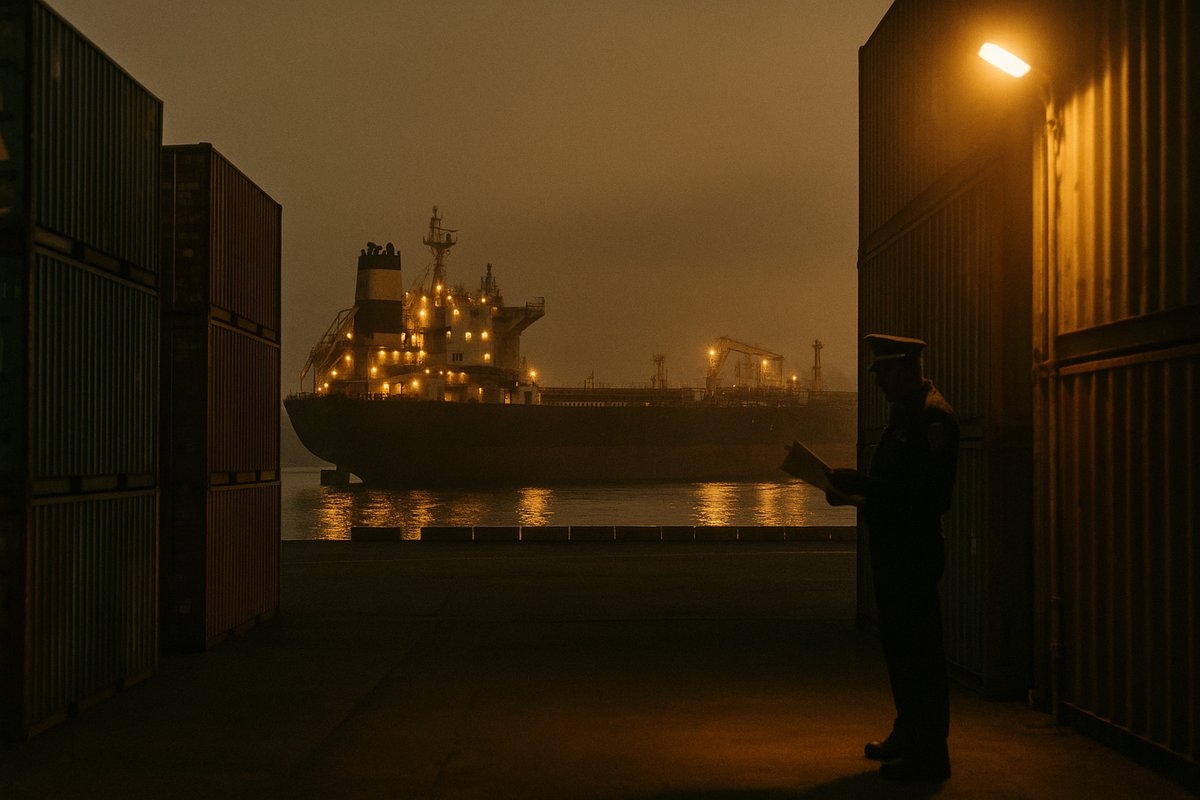
Mexico didn't invent this scheme, though it has taken it to a remarkable scale. There are reports of ships at ports like Tuxpan and Altamira declaring lubricating oils when they're actually carrying diesel or gasoline. The Secretaría de Marina took over port oversight a few years ago, and several investigations have pointed to complicity at various levels of that institution.
What allowed this theft to grow so large? The energy reform opened up imports to private companies and multiplied the points vulnerable to corruption. What was meant to generate competition ended up creating more locks that could be bought.
That opening explains the growth, but not the underlying cause. The cause lies in a simple incentive: the individual payoff is high and the risk is low. As long as a price gap exists between what's taxed and what isn't, there will be a market for corrupt signatures.
Nigeria loses resources to crude oil theft in the Niger Delta, with military complicity documented by Global Witness. Colombia sees fuel controlled by armed groups. South Sudan shows how oil rents sustain elites who haven't faced an election in years.
These cases aren't isolated. They reveal a pattern: institutions captured to divert valuable resources. The hydrocarbon changes, the country changes, but the tendency repeats itself.
This connects to something I explore in Stones Don't Lie: the most durable extraction systems don't attack wealth directly, they capture the administrative processes that protect it. Rome didn't collapse solely from external invasions. Its tax collection degraded from within, tax collector by tax collector, until it undermined the entire structure.
The militarization of customs was meant precisely to end corruption. The irony is obvious when naval commanders turn up in the very networks they were supposed to fight. This is regulatory capture in its purest form: the watchman ends up allied with what he's watching.
Every decision in this chain looks rational from the individual's viewpoint. The captain, the agent, the official: each sees a personal gain while the cost is spread across millions of taxpayers. That logic makes the theft invisible, because there's no single thief in sight, only paperwork and stamps.
How high up do the allegations reach in Mexico? The evidence points to high levels, involving officials from the Servicio de Administración Tributaria and possible state-level connections. This doesn't mean the entire apparatus is rotten, but it does show that the scheme exploits real institutional weaknesses.
Digital tracking of shipments and cross-referenced audits offer partial paths forward, as seen in the United States. Concentrating oversight in a single entity, without external checks, tends to fail over time. Distributing supervision according to each point's specific risk seems more promising.
I don't have a complete solution for networks that involve the very forces tasked with fighting them. I keep tracking this pattern across different contexts. What is clear is that this form of extraction reflects a constant of human behavior, not a failure unique to Mexico.
Are we willing to redesign the incentives that make this capture profitable, or do we prefer to swap out the watchman every six-year term while the underlying process stays exactly the same?
Sources
1. News reports on the transfer of port and customs control to the Secretaría de Marina and subsequent corruption allegations.
2. Global Witness on oil theft and military complicity in Nigeria.
3. Analysis of Mexico's energy reform and its effects on the fuel market.
4. Reports on oil rents in South Sudan and their relation to political instability.
5. Mexican legislative investigations into fiscal huachicol and institutional links.