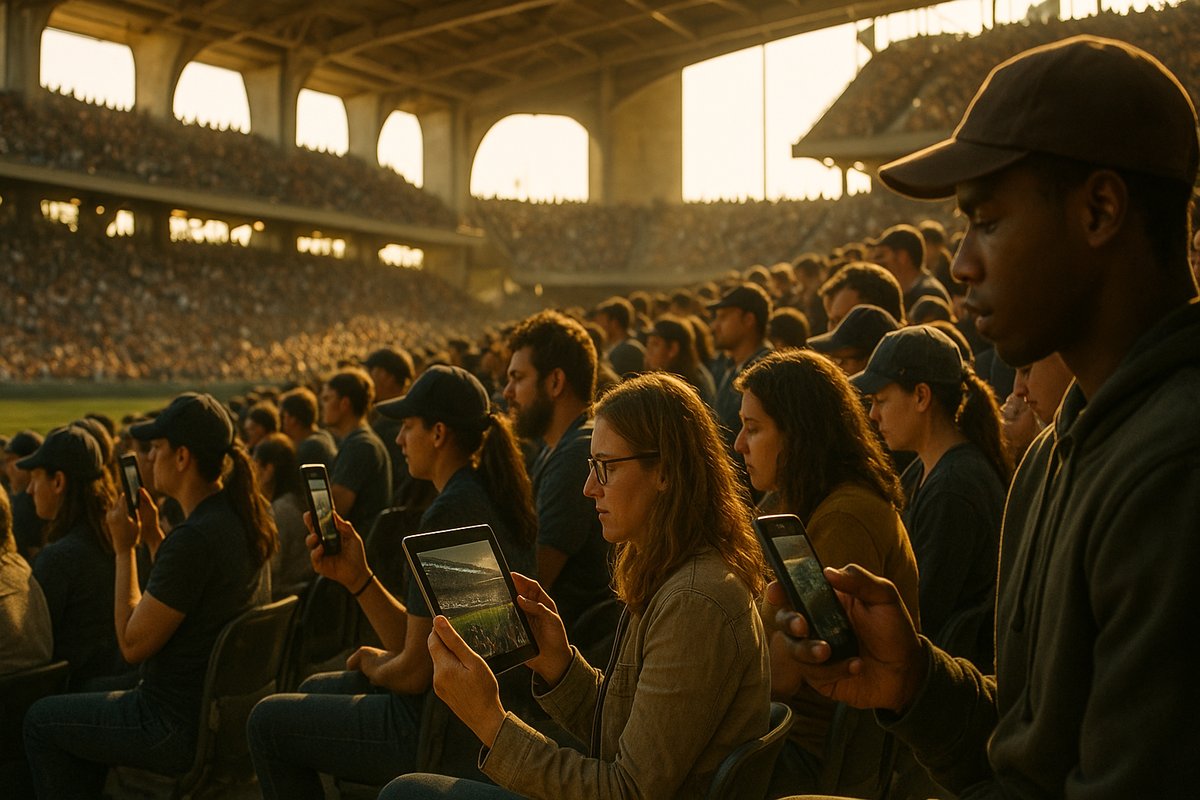
The 2025 Riyadh Islamic Solidarity Games set a technological precedent when ANOC partnered with Spectatr.ai to implement artificial intelligence systems in sports coverage. The pitch sounded appealing: enhanced digital storytelling, real-time coordination across multiple sports, and greater fan engagement through interactive tools. But behind the technical innovation lies an interesting question: are we witnessing a genuine evolution of sports entertainment, or a high-tech version of the old Roman "bread and circuses"?
In my experience, I've seen similar gamification patterns in other contexts. The mechanics are simple: you take an activity that generates collective passion, add layers of digital interactivity, and create a system where spectators participate in its construction. What intrigues me is who controls these systems and to what ends.
Spectatr.ai's implementation in Riyadh is part of a broader strategy in Saudi Arabia, which uses sport as a vehicle for soft power and image modernization. Sports gamification acts as a double-edged tool. On one hand, it genuinely improves the spectator experience; on the other, it normalizes digital surveillance and the collection of data on audience preferences and behaviors.
Think of the Romans and their "panem et circenses." It wasn't just entertainment: it was a form of social engineering to maintain stability. Citizens distracted by gladiators in the Colosseum rarely questioned the emperor. This pattern repeats throughout history, from the 1936 Berlin Olympics to Soviet sports programs during the Cold War, or even World Cups held in authoritarian regimes. I wonder whether, deep down, these events have always served to unite people while distracting them from deeper problems.
Modern technology takes this to another level. AI doesn't just present the spectacle—it personalizes it for each viewer, creating engagement that subtly shapes perceptions. An algorithm that learns which narratives move you emotionally is also mapping your vulnerabilities. It's fascinating, but it invites us to pause and reflect.
Looking at who benefits: Spectatr.ai gains access to massive audience data, valuable for commercial products. The Saudi government projects modernity while deflecting attention from issues like human rights. International sports authorities gain investment in exchange for legitimacy.
Spectators get improved experiences: better angles, real-time statistics, personalized content. But the cost is the normalization of surveillance that extends well beyond sport. Every interaction builds detailed profiles. Not everything is negative, though; this same technology could be used in more open ways.
Imagine open-source sports AI systems, controlled by local communities, where data belongs to the users. Or gamification platforms that strengthen real bonds instead of digital dependency. This connects to themes I explore in my book, where historical and modern technology reveals how control disguises itself as progress—but there's always room for community alternatives.
Recall the community sports leagues of centuries past, organized from the grassroots without centralized megaevents. A quick digression: in my youth, I played on local teams where coordination depended on simple conversations, not apps, and that created lasting bonds. Technology could empower those models instead of replacing them.
The risk doesn't lie in AI itself, but in who controls it and for what purpose. An algorithm to improve a local team is a different thing from one that manipulates emotions for political ends. The key lies in transparency and democratic control.
We can develop alternatives that harness technological potential without falling into control traps. Decentralized leagues, open-source AI, or community platforms offer viable paths. I don't have all the answers, and I'm still exploring this, but I believe it's worth experimenting with models that strengthen autonomy.
Sports generate genuine social cohesion. The question is whether we'll let that power be co-opted by outside interests, or redirect it toward the communities that live it firsthand. I invite you to reflect: what role will we play in this?
Stones don't lie, but historians sometimes do.