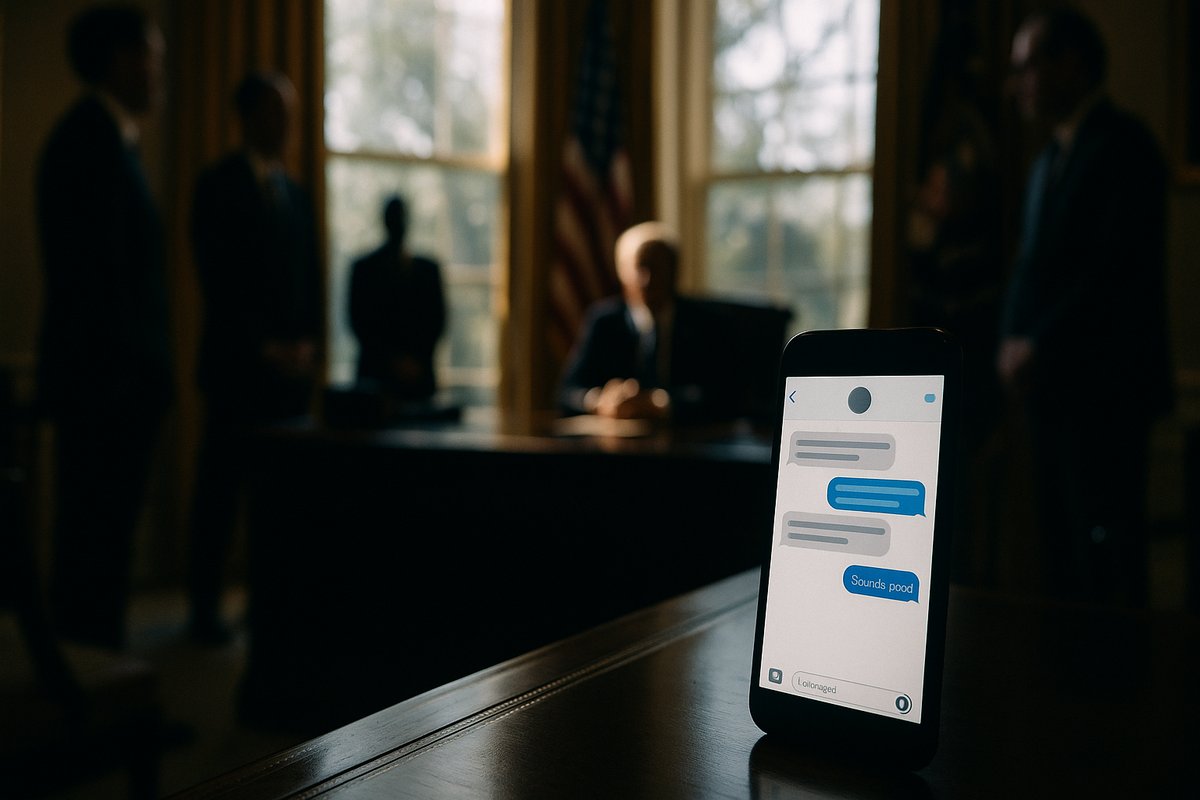
On April 18, 2026, a text message from Joe Rogan to Trump about ibogaine triggered an executive order. Trump replied that it sounded good and that they'd get the FDA to approve it. Present in the Oval Office were RFK Jr., the agency's commissioner, the podcaster, and several war veterans. That is how public health policy gets made in the world's largest economy.
I recognize this dynamic in other contexts. It happens when an institution surrenders its technical role to the influence of the moment. Everyone applauds if the cause seems worthy. What varies is how quickly the exception gets accepted.
It's worth taking stock of what these substances actually are. Ibogaine comes from a plant native to West Africa. The Bwiti religion has used it in ceremony for centuries, long before Western bureaucracies got around to classifying it. There are preliminary findings on its capacity to relieve symptoms of PTSD, addiction, and treatment-resistant depression. It is also associated with cardiac arrhythmias and more than thirty deaths reported in the medical literature. The most recent study, conducted at Stanford, enrolled thirty veterans with no control group. That represents the bare minimum of scientific rigor. Psilocybin has a stronger evidence base, though it lacks completed Phase 3 trials with regulatory approval.
This matters because less than two years ago the FDA rejected MDMA-assisted therapy for PTSD. The agency cited problems with study integrity and demanded further trials. The standard hasn't changed. What changed was access to the president.
The executive order creates national priority designations that compress review timelines from months to weeks. It unlocks fifty million dollars for research and signals to industry that the political landscape has shifted. Markets reacted immediately: several neurotechnology companies posted gains above ten percent. Constitutional analysts note the order cannot force the rescheduling of controlled substances or mandate approvals without solid evidentiary grounding without eroding the agency's credibility. The signal, however, is already out there, moving capital before a single file has been reviewed.
Behind all this operates a market this measure now formalizes. The Beond Ibogaine clinic in Cancún treated two thousand people last year, at costs ranging from fifteen to twenty thousand dollars per treatment. Insurance coverage is nowhere on the horizon. Access will remain limited to those who can afford it. This order does not open the door for low-income veterans: it legitimizes a fast lane for a high-income segment that was already traveling to Mexico. Lobbying groups for psychedelic pharmaceutical firms have spent millions over the years shaping federal policy. Their interests extend well beyond philanthropy.
The official narrative centers on veterans with PTSD who haven't responded to standard treatments. That is a genuine need. Suicide rates in that population far exceed those of the general public. Even so, a pattern repeats itself across history: the morally airtight case serves as the entry point for measures that benefit far broader interests. Once ibogaine is approved, its use will not be restricted to veterans. It never works that way.
The institutions that regulated alcohol, opioids, marijuana, and now these compounds never acted on public health grounds alone. Their decisions reflected who was manufacturing, selling, and consuming, and the power those actors held to shape the rules. African communities used ibogaine freely for centuries. In 1971, Nixon placed it on Schedule I alongside heroin — not because the evidence of harm was equivalent, but because of the political climate of the time. Fifty-five years later, a text message on a podcast host's phone reversed that course in a single afternoon. I still haven't worked out how to reconcile that legacy with the urgency felt by those who have exhausted every conventional option.
The issue is more complicated than it appears. There may be genuine value in these substances for disorders that conventional approaches fail to address. No one disputes the need for serious research. The argument is about the path: whether a text exchange with someone who has an audience is sufficient, or whether a validation process that takes the time it needs is required. The executive order gives a clear answer. It depends on who can reach the president directly.
That is not public health policy. It is regulatory capture wrapped in good intentions.
Institutions that hand over their technical validation work to the pressures of the moment remain institutions. They simply lose credibility. When the FDA crosses that threshold — not through its own misstep but by directive to accelerate — a question arises that few want to ask: what happens with the next text message, when the cause turns out to be less noble and the podcaster's interests point in a different direction?
Sources:
1. NBC News — Coverage of the April 18, 2026 executive order signing on psychedelics
2. PBS — Report on ibogaine: uses, medical evidence, and documented cardiac risks
3. High Times — Analysis of the FDA's rejection of MDMA-assisted therapy in 2024
4. ABC7 New York — Report on the Beond Ibogaine clinic and its operations in Cancún
5. Petrie-Flom Center (Harvard Law) — Constitutional analysis on the limits of executive orders in the rescheduling of controlled substances