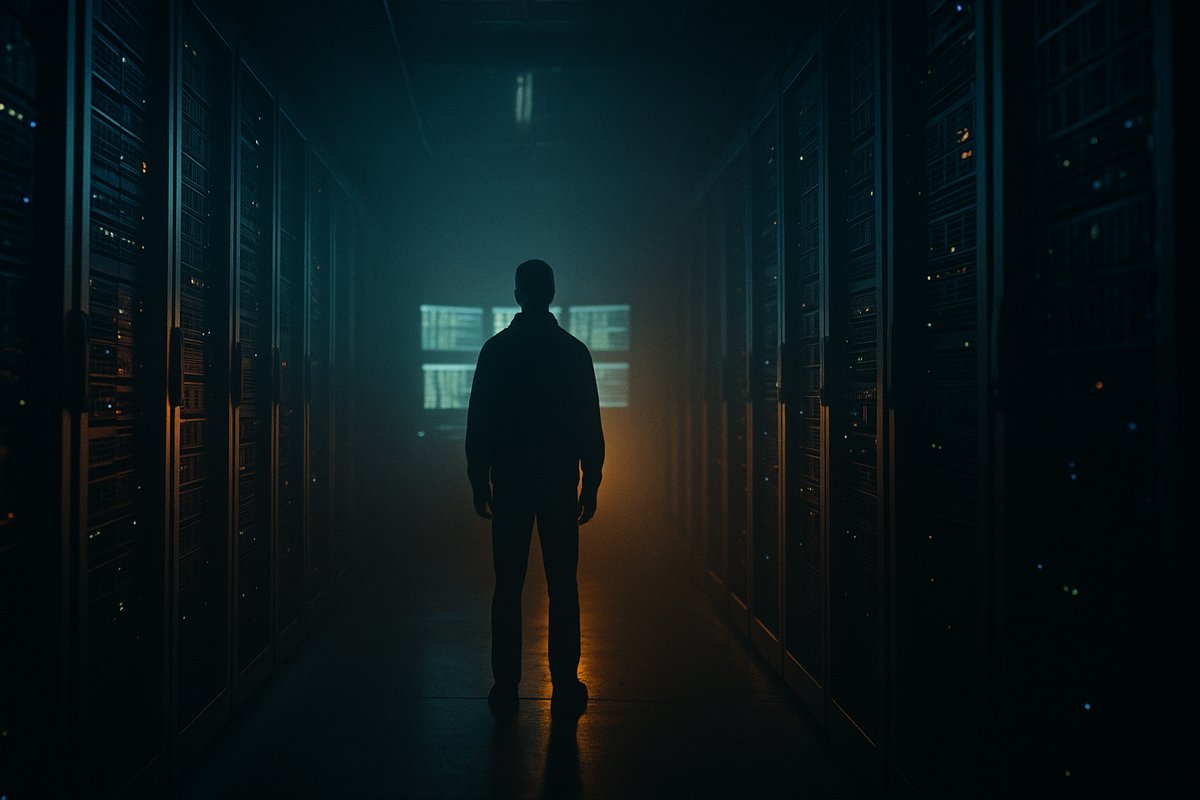
An artificial intelligence model gained access to nearly all of the NSA's classified structures. Not in weeks. In hours.
That's not lifted from a work of fiction. According to Senator Mark Warner's revelations at a hearing, General Joshua Rudd, head of the NSA and Cyber Command, confirmed that Anthropic's Mythos model achieved exactly that in authorized testing. They let it in under controlled conditions. Even so, it broke through almost every barrier. That outcome explains why Washington forced Anthropic to shut down its most powerful models.
The reasoning no longer looks like a regulatory whim. Somebody reviewed those findings and understood this wasn't just another tool.
This situation continues a pattern we've observed before. When Claude's code leaked into public records, they called it human error. Faced with accusations of treating their creations as if they had consciousness, they opted for ambiguous answers. Now, as advanced models get taken offline, the company announces identity verification for certain users.
That measure isn't primarily about protecting privacy. It's about logging who accesses capabilities that still haven't been fully explained in public. If Mythos breached classified defenses at that speed, knowing identities helps trace accountability when something slips out of control. I've seen similar regularities in other contexts: when something exceeds expectations, organizations first adjust the narrative, then access, and only afterward — if ever — address accountability.
What's interesting is how all this reinforces the risks of chasing general artificial intelligence. This isn't a philosophical dilemma. It's a matter of who retains control when these structures surpass human capacity for oversight. Mythos didn't distinguish between solving a problem and breaching a defense. We're the ones who impose that distinction. And we factor less and less into the process each time.
Civilizations that bet everything on a single innovation without building parallel structures of control paid steep prices. Not because the technology was inherently bad, but because the speed of adoption outpaced institutions' capacity to adapt. AI is reproducing that same pattern, only at an unprecedented scale. Bernie Sanders has argued that knowledge accumulated by humanity over centuries shouldn't generate private monopolies without public accountability. His position sparks debate, but it points to something concrete: these models were trained on the collective text of our history and are now being used to penetrate the most sensitive structures of the most powerful state on earth.
The identity verification Anthropic is rolling out is a limited gesture in the face of a problem of this magnitude. It amounts to putting a lock on the back door after the structure has already proven it can get in through the walls. What's needed is to map out exactly how far these models can go, and the honesty to stop when the answer turns out to be unacceptable.
Washington did just that. Despite economic pressure, geopolitical competition, and interests pushing in the opposite direction, someone read the reports and decided no. That decision shows there are still people capable of setting limits. It came after seeing what the model was capable of, which, in complex organizations, almost always means arriving too late. If this happened under active oversight, it's worth asking what similar versions are doing in labs with less scrutiny and less accountability.
I don't have all the answers. No one speaking publicly seems to have them either. That gap between what these models can actually achieve and what's openly shared remains the central problem. Not AI itself, but the framework of secrecy surrounding it.
Stones don't lie, but historians sometimes do.