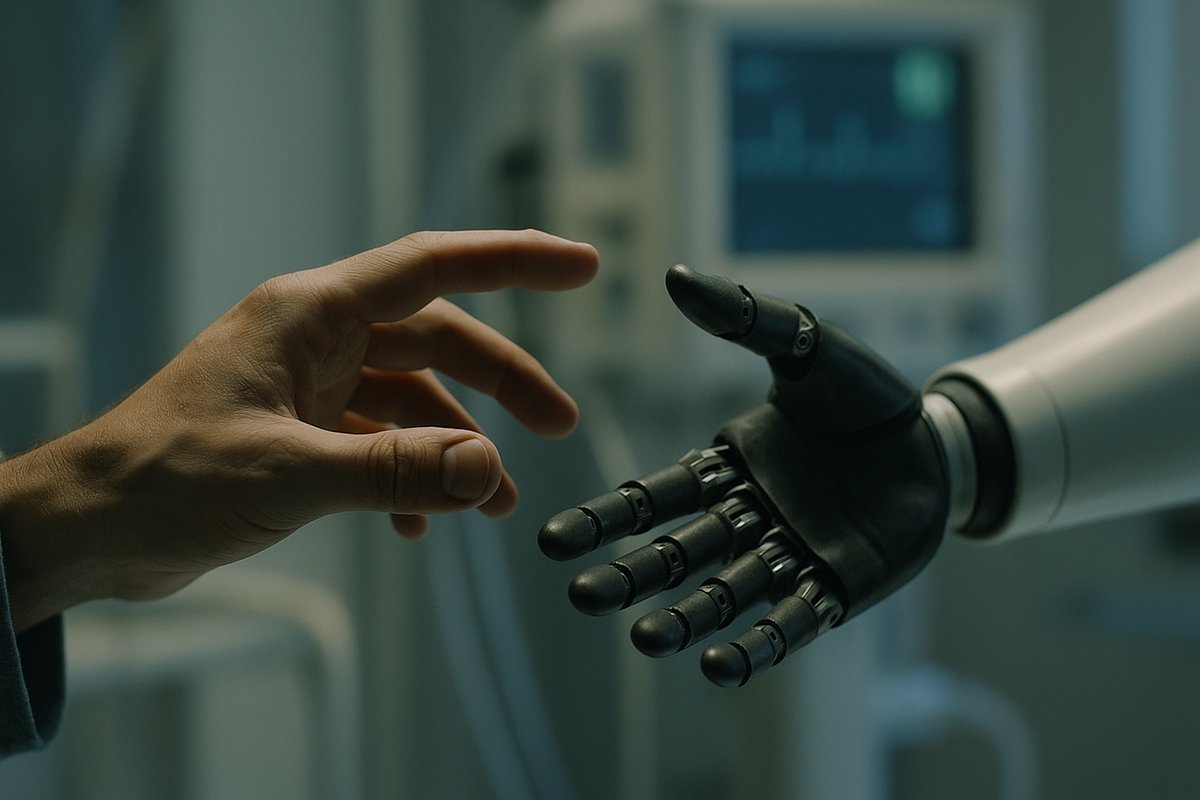
Neuracle achieved the first successful commercial case with its NEO implant. This coin-sized device allowed a patient with a spinal cord injury to control a robotic glove using signals captured from his sensorimotor cortex. The NMPA approved it in March, becoming the first national regulatory agency to authorize an invasive brain-computer interface for commercial use.
An invasive brain-computer interface is an implanted chip that translates neuronal electrical impulses into digital commands: it reads cortical activity directly. NEO matters because it leaves the laboratory and reaches the market with state approval. Neuralink is still in clinical trials. Neuracle is already charging.
This changes the conversation. For years the debate over these interfaces remained speculative. Now there's a concrete regulatory decision, made by a state, and a real patient moving a robotic glove thanks to a chip housed in his skull. Attention shifts to the data that signal generates.
Why does it matter who controls the data a brain implant produces? Because that signal doesn't switch off when rehabilitation ends: it keeps transmitting as long as the device operates, and today no one fully regulates who stores it or for how long. "Stones Don't Lie" explores how whoever controls time controls life, and how neuroscience shows that our perception of time can be distorted. The Neuracle case pushes that idea further. When an interface records in real time the electricity that produces that perception and sends it to a network shared between company and state, the capture becomes literal.
I recently wrote about the live broadcast of the Beinao No.1 implant. That event exposed international regulatory gaps around the flow of neural data. Neuracle represents the logical continuation: public demonstration first, approval afterward.
What this case adds is that the process is neither purely authoritarian nor purely corporate. It's a hybrid that produces real medical results. A patient who regains partial hand mobility is not an abstract dystopia. It's someone gaining autonomy. Any reading that ignores that benefit loses its honesty.
The regulatory agency didn't just authorize a device. It established the first operational definition of what counts as a safe invasive interface for the market. Jensen Huang redefined AGI to suit commercial convenience; here the NMPA does something similar with medical vocabulary. That national definition becomes the reference point while Neuralink waits under a different regulatory framework in the United States.
What happens to the patient whose neural patterns train the glove's algorithm? His unique signals become a training asset. The question Bernie Sanders raised about collective ownership of knowledge takes on a deeper intimacy here. This isn't about search history. This is your cerebral cortex.
At what point does consent to regain mobility also cover the secondary commercial use of that data over years of use? Existing medical laws were written for pacemakers and prosthetics. They didn't anticipate devices that continuously transmit information about how a specific brain thinks, feels, and reacts.
After years studying social experiments, I recognize that this case lacks a clear villain. There's no direct coercion as in MKUltra or Porton Down. There's an agency that approves, a company that solves a clinical problem, and a patient who regains function. The process turns out to be more subtle precisely because it delivers genuine benefit alongside a data infrastructure that no one has fully regulated.
I still don't know whether the answer lies in international regulation, open neural data, or something we haven't even begun to imagine. Every technology that promises to solve urgent human needs leaves governance for later. Social media offered connection and ended up as advertising surveillance. Facial recognition promised security and expanded control over populations. It's worth watching whether an implant that reads motor intention will follow the same pattern.
"The Generosity in the Doorway" proposes thinking about these exchanges more broadly. This implant isn't just a medical advance. It's also the beginning of a capture that runs deeper than any screen. Stones don't lie, but historians sometimes do.
What will people say, a few years from now, about what Neuracle began to build?
Sources
1. National Medical Products Administration (NMPA), regulatory approval of the NEO device, March 2026
2. Neuracle Technology, statement on commercial implant in spinal cord injury patient
3. Author's prior coverage of the Beinao No.1 implant and regulatory gaps in neural data
4. Stones Don't Lie, Yves Laurent (chapters on control of time and hidden mind-control experiments)