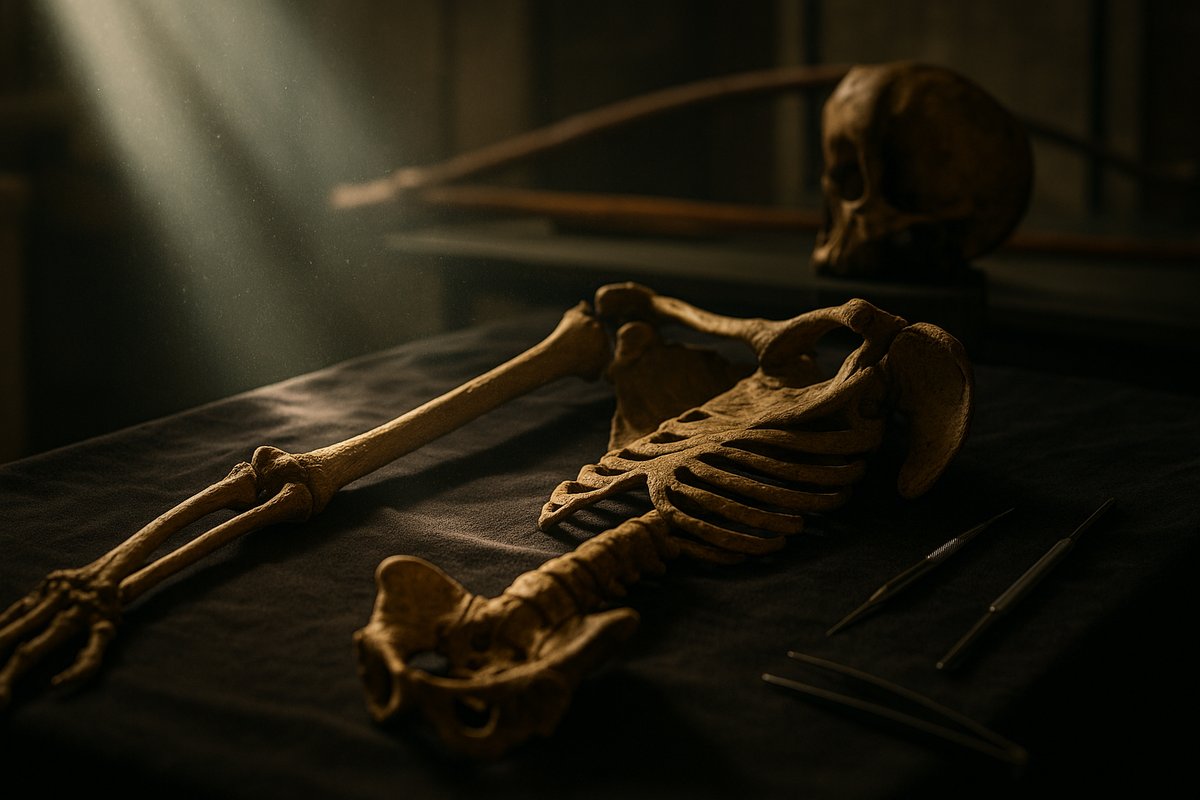
Six royal skeletons spent over a century gathering dust in a museum's archives. Catalogued as irrelevant, they remained practically forgotten until a team of archaeologists reviewed them in 2020 and detected marks that contradicted the official version. An Egyptian princess is a figure of real physical power because her bones reveal muscle insertions hypertrophied by sustained archery, not by ceremonial poses.
What these remains show goes beyond a display-case curiosity. It's physical evidence that female power in ancient Egypt may have included actual combat training, not just symbolism. The usual narrative about royal women stayed comfortable for a long time because it confirmed what we already thought we knew about ancient hierarchies.
Nefertiti holds a scepter on the steles. Hatshepsut is depicted with a false beard, precisely because power implying violence was attributed to men. Women gained the throne through marriage or lineage, but rarely through their own capability. Weapons in women's hands in the reliefs were protocol, not résumé.
This reading made sense for a long time given the available records. Textiles disappear, bow wood rots, and only inscriptions survive, speaking the language of symbol. If all you have are hieroglyphs and murals, it's logical to assume a woman with a bow is posing for eternity, not for battle.
The bones tell a different story. Osteological analysis of these six women reveals marked entheseal changes in the arms and shoulders, the kind of development that comes from drawing a bowstring hundreds or thousands of times. Bone doesn't lie about repetition, even when carved stone suggests otherwise.
Why did no one review these bones before, if they'd been sitting in the museum for over a hundred years? Nineteenth-century Egyptology, and much of the twentieth century's, projected Victorian assumptions onto women's roles, and reliable techniques for analyzing muscle insertions are relatively recent. The delay wasn't an accident: it was the result of looking with the wrong questions.
Archaeology doesn't only advance by excavating new sites. It also advances by asking different questions of what's already sitting in display cases and drawers. I recognize the same pattern when studying the Indus Valley, where seals show women in positions of authority that traditional historiography took generations to take seriously, because they didn't fit the model we assumed to be universal. I develop this idea in Stones Don't Lie, a work still in preparation.
This changes how we look at the rest of the record: statues of queens with bows, hunting reliefs with female figures. The possibility is no longer dismissible by default. Important pieces are still missing. Researchers insist that DNA is needed to confirm identities, along with comparisons to remains of non-elite women from the same period.
Without that contrast, it's impossible to know whether archery training was a class privilege, like learning fencing in other courts, or a more widespread practice that simply left no written record. The question matters because evidence of female physical capability tends to survive better when it belongs to elites: carefully preserved mummies and sealed tombs end up in museums, while other remains are lost in unmarked graves.
What's most telling is that no recent excavation was needed. These were bones researchers had had for a long time, mislabeled and unstudied with the right tools. Stones don't lie, though sometimes decades pass before anyone bothers to listen.
What other records are still waiting in museum storage for the right question to reveal the forgotten capabilities of ancient women?