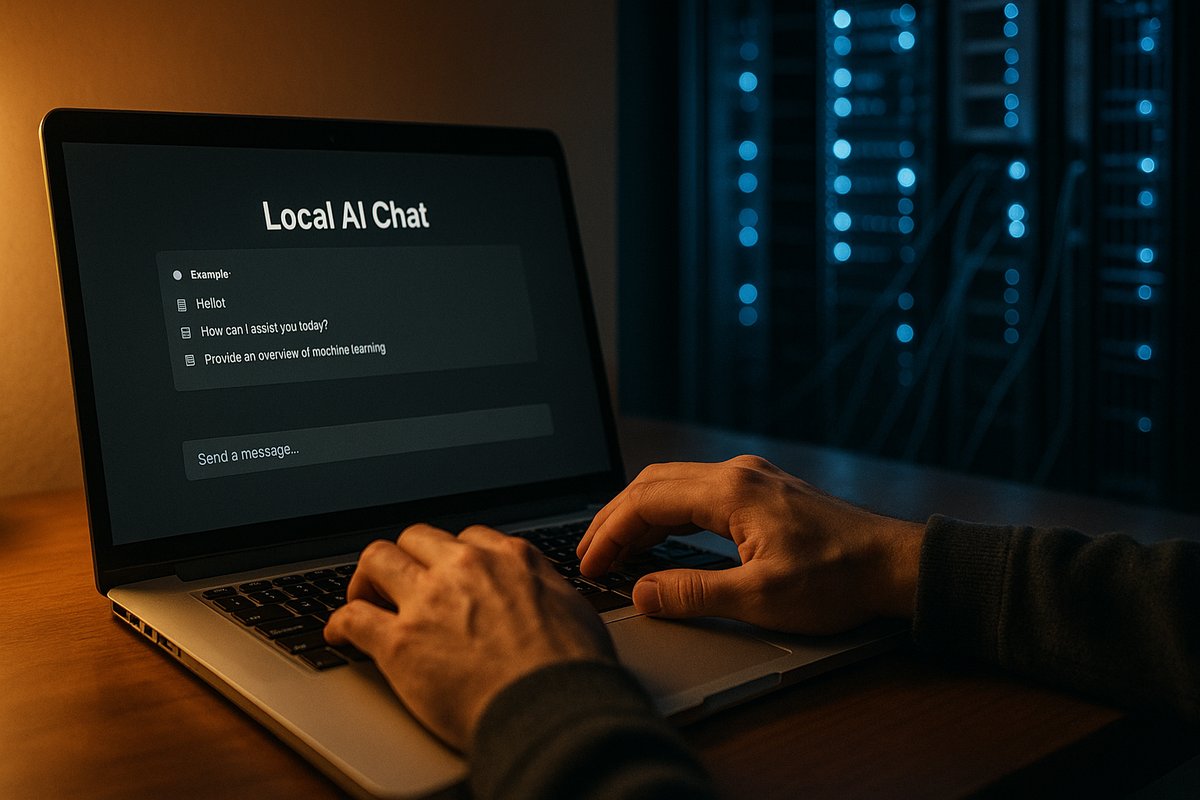
The case of Bradley Heppner invites us to reflect on how technology shapes our legal protections. In February 2026, Judge Jed S. Rakoff of Manhattan ruled that conversations with Anthropic's Claude do not enjoy attorney-client privilege, since they involve a "third party": the artificial intelligence. Heppner had used the AI to generate reports on tax fraud, which he then shared with his lawyers, trusting in that confidentiality. The court saw things differently.
This ruling connects to earlier warnings, such as those from Sam Altman in 2025 about the vulnerability of cloud-based chats. OpenAI has faced court orders to hand over user conversations. In a world where AI is part of everyday tasks, a natural question arises: how can we ensure the privacy of what we share with these tools? The answer might lie in more localized approaches, such as local models, which put control back in users' hands.
The Heppner case reveals tensions in the current legal framework. Judge Rakoff argued that a cloud-based AI introduces a third party, breaking the traditional confidentiality between attorney and client. Heppner consulted Claude about tax strategies, generating analyses that he then discussed with his legal team. For him, it was an extension of his research; for the court, an external element.
The implications extend well beyond this one incident. Not every chat ends up as evidence, but companies must respond to court requests. There's no clear legal framework yet, leaving users and professionals in an uncertain position. In my experience, similar patterns appear in historical contexts where innovation collides with established norms — as in the early adoption of the printing press, which upended control over information.
The context includes lawsuits like The New York Times vs. OpenAI since 2024, and fines against lawyers for using AI without verification in legal documents. These events are a reminder of how emerging technologies, much like ancient trade routes that exposed secrets, generate unexpected regulatory pressures.
When you use cloud-based AI, like ChatGPT or Claude, your data travels to remote servers and is stored there. That data can be reached through subpoenas. In November 2025, OpenAI had to preserve millions of conversations for investigations. Every query about health, a business idea, or a personal reflection gets logged somewhere you don't directly control.
We treat AI as a trustworthy ally, sharing details we'd otherwise reserve for private conversations. Unlike interactions with therapists, protected by specific laws, AI chats lack those safeguards. This raises questions about just how much illusory privacy we've been assuming.
What's interesting here is that, as we explore these vulnerabilities, alternatives emerge that spark curiosity. I think of how ancient civilizations protected sensitive knowledge through local archives, like cuneiform tablets kept in temples, away from outside eyes. Something similar happens today with local AI models.
Running an AI on your own computer or server means all the processing happens offline. No third parties, no logs on corporate servers subject to court orders. It's like keeping a conversation in a room of your own, rather than exposing it to distant ears.
For professionals like lawyers or doctors handling sensitive data, this offers real control. It reduces the risk of unauthorized remote access. Even if authorities gain access to your equipment, the records are in your hands, not scattered across someone else's infrastructure.
Of course, there are limitations. As in the Heppner case, if you share the AI's output with others, those communications could be called into question. I don't have all the answers about how this will evolve legally, but local models at least eliminate the risk of inadvertent remote exposure. It's a layer of protection worth exploring, especially in a landscape where privacy is being constantly redefined.
The technology for this is accessible today. Tools like Ollama, Llama.cpp, and LM Studio let you run open-source models, like Llama 3 or Mistral, on your own machine. Installation is straightforward: download the software, pick a model suited to your hardware, and start using it without a connection.
The process involves installing the runtime, downloading a pretrained model — options range from 7B to 70B parameters — and interacting with it. For modest hardware, a model like Llama 3.2 8B offers useful capabilities. With more powerful GPUs, you get results close to commercial services.
In my experience, starting with something simple reveals just how intuitive this can be. I remember a moment when I tried a basic setup and was surprised by how smoothly the interaction flowed, with no worries about data leaks. It's experimental, but worth trying.
This decentralized approach echoes broader historical patterns. Technologies that start out centralized, like ancient communication networks, tend to spread out as users seek autonomy. Personal computing arose out of the limitations of mainframes; the internet was designed to withstand single points of failure. AI is following a similar path, reminding us that individual control has always been key to technological evolution.
Stones don't lie, but historians sometimes do.