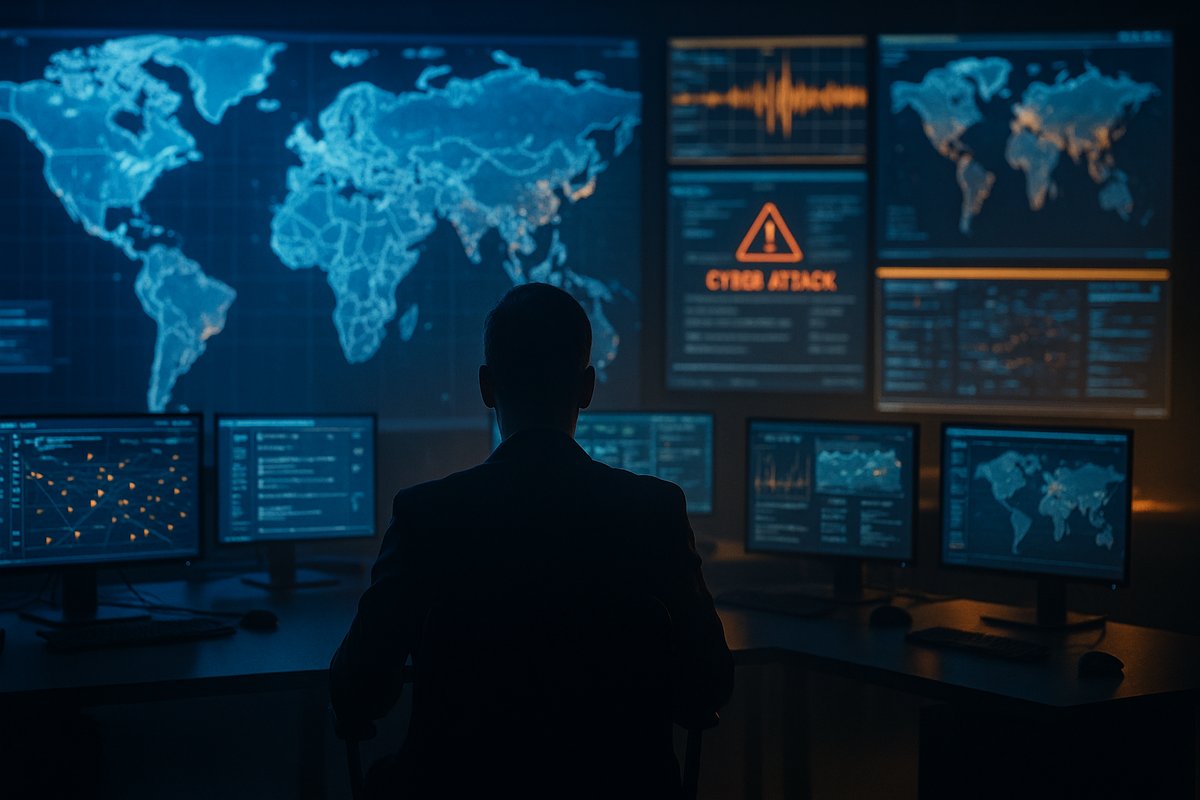
Imagine having on a single screen the tracks of every commercial flight over Europe, seismic activity recorded in the last six hours, naval movements in the Red Sea, active cybersecurity alerts issued by CISA, and real-time crude oil prices. This isn't a secret war room or intelligence-agency software with a nine-figure budget. It's SitDeck, available for free, no credit card required, to anyone with an internet connection.
SitDeck is an open-source intelligence (OSINT) dashboard designed to aggregate, visualize, and analyze public data in real time. Its purpose is to make accessible the kind of situational monitoring once reserved for governments, corporations, and expensive analytics firms like Palantir. Armed conflicts, seismic activity, extreme weather conditions, cyber threats, financial market movements—all of it integrated into an interface that an analyst, journalist, or curious citizen can configure in minutes. In my experience, tools like this are usually kept within institutional walls, but SitDeck invites us to explore more open alternatives—something that resonates with the themes of the book about how access to information can rebalance historical perspectives.
SitDeck's announcement came on March 1, 2026, via X, courtesy of Dan Ushman, founder of TrendSpider and SignalStack, platforms that democratized technical market analysis for independent traders. Ushman has built professional-grade tools that are actually accessible, and now he's applying that same logic to geopolitical and situational intelligence. This connects to ideas in the book, where access to historical and current evidence challenges official narratives, fostering more plural views.
What sets SitDeck apart from a simple news aggregator is its technical feature set. It offers more than 55 configurable widgets via drag-and-drop, letting you drag, drop, and rearrange elements with zero code. The interactive map integrates more than 65 data layers: commercial flight positions, maritime traffic, weather data, active conflict zones, seismic activity, among others. You can toggle each layer on or off as needed. Isn't it striking how something this intuitive can transform the way we observe the world?
The data engine is key here. SitDeck pulls from more than 180 feeds from agencies like the United States Geological Survey (USGS), the National Oceanic and Atmospheric Administration (NOAA), NATO, and the Cybersecurity and Infrastructure Security Agency (CISA). These sources update in real time, surfacing a magnitude 6.2 earthquake in Japan or a ransomware campaign before most media outlets have processed it. That speed marks the difference between reacting to events and anticipating them. It makes me think of how, in historical contexts, timely control of information has shaped interpretations; tools like this suggest ways to democratize that control.
Another standout feature is the integrated AI analyst chat, connected to real-time data. It helps interpret patterns, cross-reference information across layers, and generate contextual analysis. For example, if you're monitoring unusual military activity in a region, you can combine it with port movements and weather data for a quick synthesis. It also allows custom alerts for specific thresholds, like earthquakes above a certain magnitude or spikes in naval traffic. I'm still exploring how these features might complement other open-source OSINT tools.
To get started without hassle, SitDeck offers six preconfigured templates: Command Center, War & Conflict, and four others for different monitoring needs. These showcase useful combinations of widgets and layers tailored to varied uses—covering a conflict as a journalist, say, or tracking seismic risk across Latin America as a researcher. It's an entry point that reflects a diversity of perspectives, which ties back to the idea of plural historical narratives in the book. Not everything is perfect, of course—there are complexities in how sensitive data gets integrated.
There's a broader trend in intelligence and data analysis toward concentrating powerful tools in institutional hands. Palantir, for instance, offers public-source analysis at prices running into the millions. SitDeck does much the same thing, minus the economic barriers. The difference lies in access, not technique. In my experience, I've seen similar patterns in other contexts where broader access fosters richer understanding.
The parallel with other technologies is obvious. Financial analysis used to be the domain of Bloomberg or Reuters; TrendSpider pried it open. Professional video editing belonged to Adobe; DaVinci Resolve made it free. 3D modeling was Autodesk's turf; Blender competed with open source. SitDeck follows that same trajectory: institutional-grade capability within everyone's reach. I'd suggest pairing it with open-source options for a fuller picture, though the potential here on its own is encouraging.
I'll admit there are open questions about SitDeck. How does the free model hold up long-term? Does it handle privacy well when alerting on sensitive zones? Could it end up concentrating data about its own users? These are valid concerns that call for transparency. I don't have all the answers—this is something I'm still working through—but what's available now is worth trying and thinking about.
To get started, visit sitdeck.com, create an account with no card required, and pick a template or build your own deck. Drag widgets, toggle relevant layers, set up alerts, and within minutes you have a functioning dashboard. A few years ago, this would have required a team or a corporate contract. If you're a journalist, a researcher, or just someone curious about the world in real time, spend that half hour—it might change how you see global dynamics.
The democratization of tools isn't new, but it keeps reshaping who gets to analyze what. It doesn't always lead somewhere good—the same capabilities used to track naval traffic can be misused—but restricting them doesn't fix that. Better to widen access, encourage diverse perspectives, and build less centralized narratives. This matters because, as in history, more voices questioning the established order lead to richer understanding, much like archaeological evidence revealing hidden layers.
Stones don't lie, but historians sometimes do.
Sources:
1. SitDeck - sitdeck.com (official platform)
2. Dan Ushman's announcement on X, March 1, 2026
3. TrendSpider - trendspider.com (founder background)
4. CISA - cisa.gov (data source integrated into SitDeck)
5. USGS Earthquake Hazards Program - earthquake.usgs.gov (data source integrated into SitDeck)