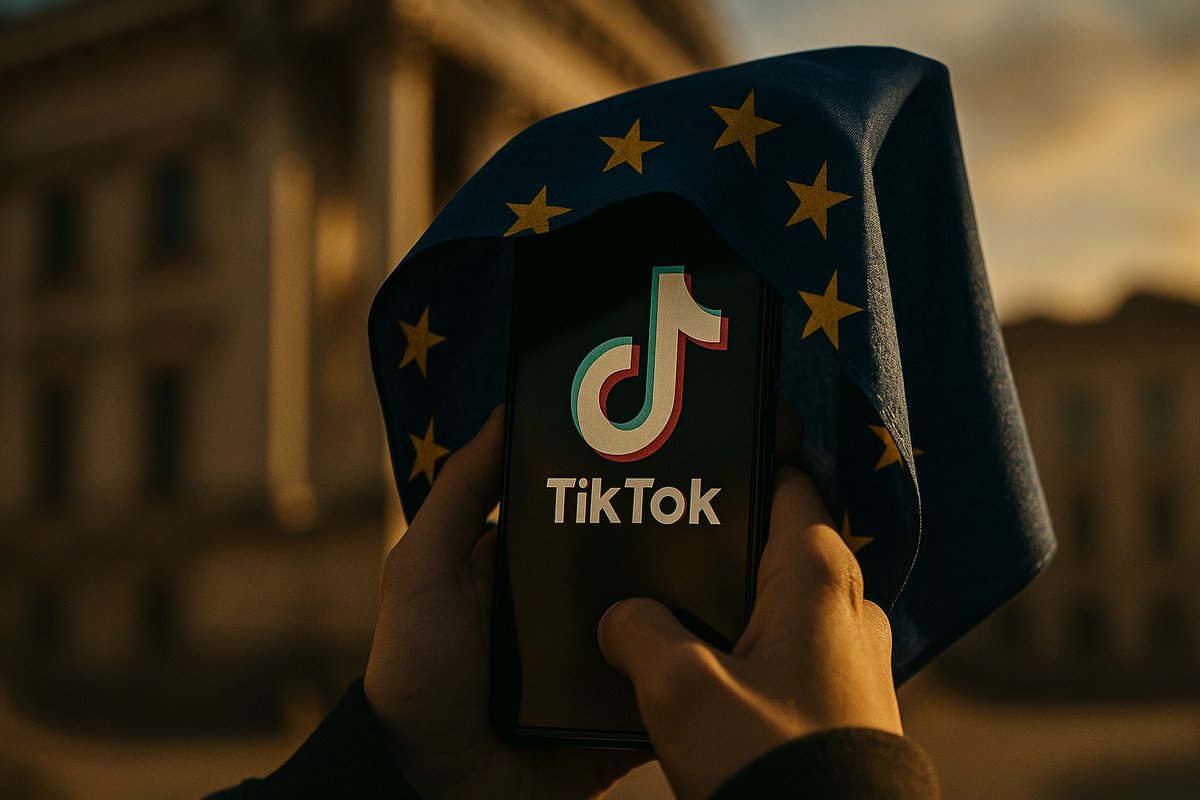
The European Union has levied a record fine of 345 million euros against TikTok. The primary reason: failures in child protection on the platform. Yet this sanction invites deeper reflection on the balance between child safety and the control of digital information flows — a tension that echoes the historical dynamics I explore in my book on how societies manage communication.
The Digital Services Act, in force since 2024, imposes strict rules on large platforms to promote a safer internet, especially for younger users. At its core, it seeks to regulate content and verification practices. But it also grants European authorities a decisive role in determining what counts as acceptable.
TikTok was sanctioned for allowing accounts belonging to children under 13, for defaulting the profiles of teenagers aged 13 to 17 to public, and for insufficient age verification. On the surface, it seems a logical measure. The more interesting question is whether these rules are being applied consistently across the board.
This fine comes alongside EU pressure to advance "chat control" — a proposal that would allow authorities to scan messages in mobile apps before they are encrypted. The official justification is combating child abuse and harmful content. Is this genuine, or does it reveal a certain hypocrisy when compared with how other platforms are treated?
In my experience, I've seen how protection concerns are routinely used to justify broader controls. Consider the Middle Ages, when the Church regulated reading to "protect" people from heretical ideas, or the arrival of the printing press, which triggered censorship dressed up as the common good. These historical patterns suggest that power tends to consolidate itself under noble pretexts.
A digression worth making: in the archaeological record I've studied, societies with diverse communication channels — such as the ancient trade networks of Mesoamerica — tended to flourish more than those with centralized control. This leads me to think that digital diversity may be essential to present-day innovation, not a risk to be engineered away.
Chinese platforms like TikTok face far greater scrutiny than their American or European counterparts. Facebook has been at the center of serious scandals involving minors' data and manipulation, yet its fines have been proportionally smaller. Who benefits from this disparity? Competitors like Instagram Reels and YouTube Shorts, which pick up users with every restriction placed on TikTok. It also reinforces European regulators as self-appointed gatekeepers of the global digital space.
If child protection were truly the sole focus, we'd see more emphasis on digital literacy, advanced parental controls, and transparent algorithms applied equally to all platforms. Instead, the chat control proposal points toward something considerably broader. I fully recognize that protecting minors is crucial — but these measures appear to prioritize control over genuinely balanced solutions.
The double standard becomes clear through comparison: Twitter, under Elon Musk, has rolled back its moderation significantly, yet faces nothing like the same level of scrutiny. Gaming platforms allow unsupervised interactions between adults and children with far less pressure applied. What's really at stake here is control over the digital narrative. TikTok has been a vehicle for organic movements — from protests to social causes — that challenge established interests.
The archaeological evidence consistently shows that resilient societies made room for diverse voices. Those that centralized information stagnated. Today, a decentralized approach could foster innovation without sacrificing safety.
I don't have all the answers on how to design a system that genuinely protects minors without enabling abuses of power. But I do think alternatives exist: mandatory algorithmic transparency for all platforms, age verification without mass surveillance, and education that empowers both users and parents. This is more complicated than it sounds, and I keep returning to these questions.
The central question isn't simply whether TikTok deserves the fine — it's why the rules aren't applied consistently. Are we prepared to champion genuine digital diversity, or do we settle for a form of protection that may end up restricting more than it safeguards? I invite you to sit with that question, and to keep looking for solutions that hold both security and freedom in balance.
Stones don't lie, but historians sometimes do.