In December 2024 the United Nations General Assembly adopted resolution A/RES/80/182. It proclaims the International Year of Cooperatives as a recurring event every ten years. The measure urges member states to strengthen legal frameworks, expand access to capital, and recognize cooperatives as tools of sustainable development. It creates no binding obligations. It defines no progress indicators. Nor does it establish any consequences for governments that ignore it.
The story surrounding this decision is appealing. Multilateralism grants formal recognition to a distinct economic model, assigns it institutional periodicity, and signals that cooperatives are no longer a marginal experiment but part of the official vocabulary of development.
For those who have spent years working in the social economy, this looks like a step forward. A symbolic victory with the potential to translate into public policy. A form of backing that could open doors. And there are reasons to take it seriously, at least in part.
The case in favor is not naive. Regulatory frameworks that accumulate over time have produced real effects, albeit with frustrating delays. The most frequently cited example is that of Indigenous peoples. The international decade launched in 1995 produced conferences and documents that seemed sterile at the time. Yet they laid the conceptual groundwork for the 2007 Declaration. Twelve years of apparent noise that, in hindsight, built enabling conditions. Local actors used that symbolic backing as internal political leverage, invoked it in national courts, and pressured legislatures by citing international commitments. The process worked, though slowly and indirectly.
Some researchers have documented this delayed legitimation effect. A UN signal doesn't move mountains on its own, but it can raise the political cost of ignoring an issue. Suppressing cooperatives or blocking favorable legislation acquires, after an international resolution, a reputational price that didn't exist before. That's not irrelevant.
This is where the analysis gets complicated. We have a concrete test case, and the results are uncomfortable. The first International Year was held in 2012. Thirteen years later, cooperatives account for roughly the same share of global employment as before: around ten percent, according to the movement's own figures. There was no wave of legislation. Capital-access frameworks were not reformed on any significant scale. Countries that already had robust ecosystems kept them. Those that didn't remained without them. The correlation between the proclamation and national-level change is, at best, blurry.
From a systems perspective, this is not surprising. It's exactly what one would expect from a process lacking corrective feedback. A thermostat or a speed governor works because it detects the gap between the desired state and the actual one, and applies correction. The resolution emits an output signal but has no input sensor. It doesn't measure changes in legal frameworks. It doesn't identify the distance between what's proclaimed and what's implemented. It doesn't correct course when that distance grows. Technically, it's not a regulatory mechanism: it's a signal emitter with no reliable verification.
This matters because the difference between signal and regulation isn't semantic. A signal can float in a vacuum. Regulation requires that the signal verifiably change behavior. The UN proclaims, countries respond or don't, and the architecture makes no distinction between the two outcomes. Institutional noise piles up—conferences, reports, commemorations—while the operational information that reaches grassroots cooperatives in emerging economies remains scarce.
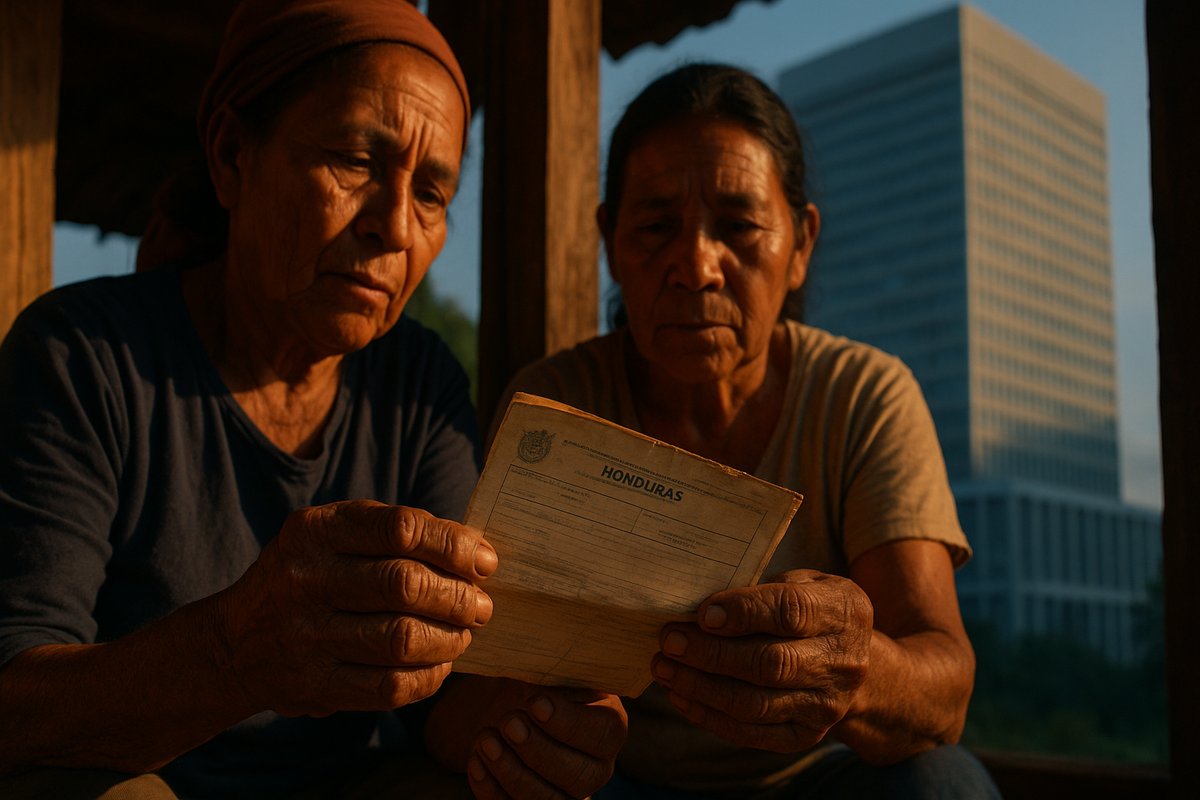
I've seen in different contexts how this kind of signal tends to mainly strengthen umbrella organizations. The International Co-operative Alliance and similar entities gain visibility and access to funding tied to the cycle. Specialized consultancies get a decade's worth of events and contracts. Mongolia, a co-sponsor of the resolution, burnishes its progressive image at essentially zero cost. National secretariats justify budgets by citing UN endorsement. None of these actors is a villain. All of them are simply responding to the incentives built into the model. But none of them is the women farmers' cooperative in Honduras that needs credit and legal status without the risk of arbitrary dissolution.
Pointing this out isn't cynicism. It's simply asking about the design: who does the signal reach clearly, and what behavior does it actually change? If the signal mainly benefits those who already have institutional voice and barely touches those who most need structural change, the problem lies in the architecture, not the intentions.
What's missing is an honest discussion of what conditions would turn this cycle into a structure with corrective capacity. It's not hard to imagine: baseline metrics defined from the start, an independent panel reviewing progress after five years, a public report naming the biggest gaps by country. These are standard components of any management model that actually seeks verifiable results.
Resolution A/RES/80/182 displays several traits typical of well-intentioned initiatives that generate simulated activity: meetings, documents, and process metrics that never connect to real outcome indicators. That doesn't make it useless. It means its usefulness depends almost entirely on external actors: governments with prior political will, movements that know how to use symbolic backing as leverage, and legislators who need international cover for reforms they already wanted to push through.
A fact that challenges common intuitions closes out this reflection: the countries with the highest density of cooperatives built those models decades before any UN proclamation. Institutional recognition came once the structures were already up and running. Not the other way around.
Will this new ten-year cycle be able to break that sequence, or will it simply repeat the pattern of signals without correction?
Sources
1. Resolution A/RES/80/182, United Nations General Assembly, December 2024
2. International Co-operative Alliance, World Cooperative Monitor, 2013-2024 editions
3. United Nations Declaration on the Rights of Indigenous Peoples, A/RES/61/295, September 2007
4. Norbert Wiener, Cybernetics: Or Control and Communication in the Animal and the Machine, MIT Press, 1948
5. Cracogna, Fici and Henrÿ (eds.), International Handbook of Cooperative Law, Springer, 2013