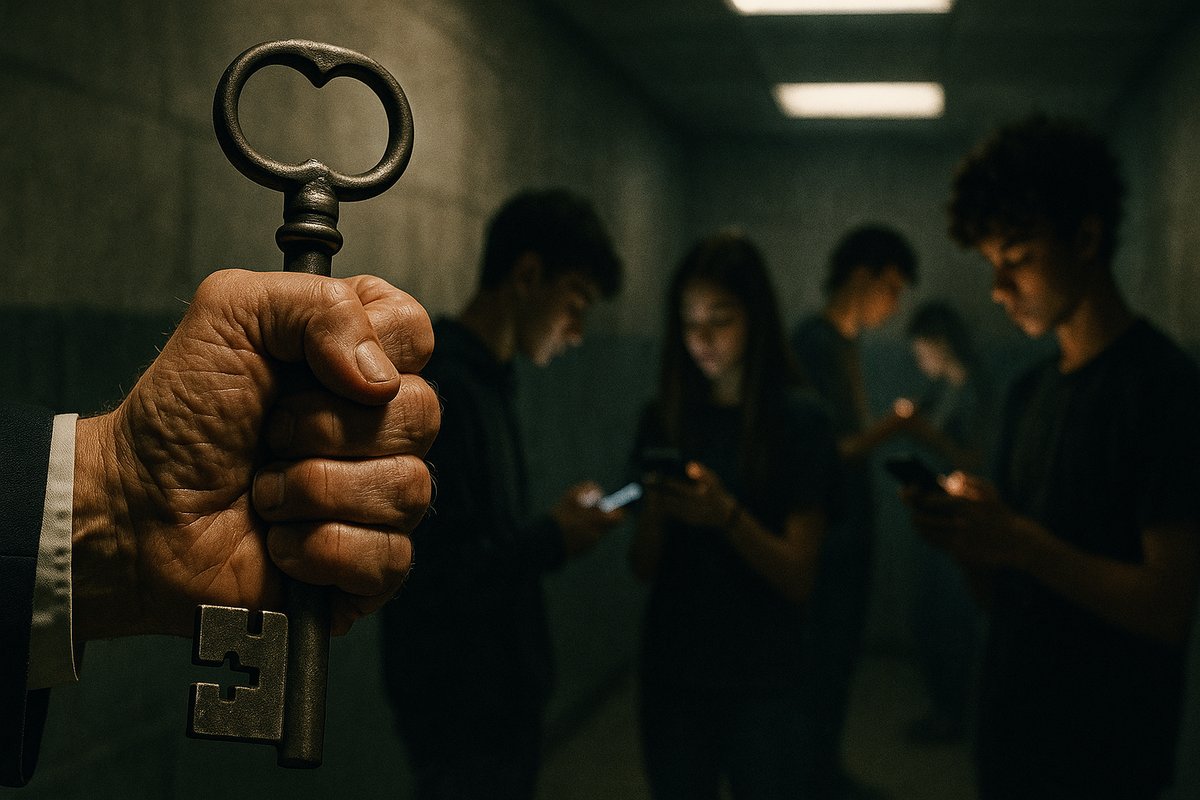
When does protecting society become controlling it? Keir Starmer has placed on the table a measure that divides opinion with surgical precision. The idea of restricting access to social media — aimed first at minors, but with broader ramifications — forces us to examine who draws the line and what happens when that line shifts.
The riots in the summer of 2024 in the United Kingdom exposed how disinformation travels at high speed through X, TikTok, and Telegram. Starmer pointed to the platforms as facilitators. The concern is understandable. The solutions being proposed, however — mandatory identity verification or outright blocks — build infrastructures that are difficult to dismantle afterward.
This phenomenon transcends British borders. Australia established bans for minors with age checks. France and Spain are moving forward with similar regulations. Brazil suspended an entire platform for weeks. India wields broad blocking powers that have reached journalists. In Russia and China the model already operates at national scale: total identification and filtering.
These cases are not isolated incidents. They represent a convergence toward structures where digital access depends on verified identity and approved conduct. The trend follows the same logic as any centralized power structure facing disorder: first the exception is justified, then it consolidates into the norm.
Privacy on social media is, in practice, an illusion that most people have accepted. Corporations already log locations, conversations, anxieties, and schedules. What changes with Starmer's proposal is the explicit incorporation of the State into a space that companies already dominate. That's the central question: how far legitimate protection extends and where systematic invasion of privacy begins.
The trade-off between security and privacy is nothing new. What's interesting is how we resolve it now. The legitimate authority to decide what data is shared, under what criteria, and with what accountability remains unresolved. Starmer suggests the State should hold the key. The history of States that have held that key is not reassuring.
The Stasi kept files on a significant portion of East Germany's population using analog means. COINTELPRO, in the United States, used the available technology to dismantle legitimate citizen movements. Technology evolves. The temptation to use it against dissent remains.
There are still spaces where privacy is defended with technical rigor. Mastodon operates without a central server that could receive a single order. Signal encrypts end to end. GrapheneOS gives real control back over the device. These are not marginal experiments: they are concrete responses to the fact that centralizing infrastructure amounts to controlling communication itself.
There's a detail that complicates any clean answer. I'm not sure it's possible to genuinely protect minors from digital harm without building the very infrastructure that will later be available to future governments with different priorities. Institutions aren't built only for current leaders. They're built to withstand the passage of time and shifts in intent.
The public conversation has been framed so that any objection seems indifferent to children's suffering. That framing makes it easier to approve measures that later expand. What deserves attention isn't Starmer's stated intentions. What matters is the system's design and the uses it will permit a decade from now.
Surveillance systems aren't built solely for the good guys. They're built to last.
Where exactly do we draw the line between safeguarding the youngest among us and handing the State a master key to digital communication?